

- 92 groups urge Canada to expand sanctions on Myanmar oil and gas sector
- Junta bombing of Ponnagyun IDP shelter injures three civilians
- UN investigators seek evidence on deadly Kyauktaw airstrike as attacks continue across Arakan
- Myanmar military continues airstrikes across Arakan after deadly Kyauktaw attack
- ISP-Myanmar reports at least 115 mass civilian killing incidents across Myanmar
Vox Pop: How Would an Internet Shutdown Affect News Media in Arakan?
Against this backdrop, DMG spoke with editors and reporters from Arakan-based media organizations about how an internet shutdown could affect independent journalism, the public's right to information, and life in conflict-affected communities.
16 Aug 2026

DMG Newsroom
16 August 2026, Mrauk-U
In Arakan State, where communities continue to endure armed conflict and alleged human rights violations, the Myanmar military has cut off conventional mobile phone and internet services across many areas. As a result, both independent media organizations and the public have become heavily dependent on Starlink satellite internet.
However, SpaceX, Starlink's parent company, has introduced new policies governing the use of its services in unauthorized locations. Under the updated rules, which are scheduled to take effect on August 17, concerns have grown among users in Myanmar, where Starlink does not have official authorization.
If Starlink services are disrupted, independent media outlets reporting on human rights violations, civilian casualties and alleged war crimes could face severe operational challenges.
Against this backdrop, DMG spoke with editors and reporters from Arakan-based media organizations about how an internet shutdown could affect independent journalism, the public's right to information, and life in conflict-affected communities.
Ko Phadu Tun Aung | Field Reporter
"The internet is absolutely essential for journalists. We can only publish news if we have internet access, and it allows us to communicate quickly with our sources. If the internet is cut off, we will not be able to do anything. News operations could come to a complete halt. That is why internet access is so important.
"An internet shutdown would not affect only journalists. The entire public would face difficulties. Money transfers and other financial transactions could also stop. From a news perspective, without internet access, people would no longer receive timely information. Instead, they might rely only on rumors circulating within villages and communities, increasing the spread of misinformation. Those are some of the serious consequences.
"Although active ground fighting has largely ceased in many towns administered by the Arakan Army (AA), the military continues to launch attacks by air and sea on a daily basis. Documenting civilian deaths and reporting alleged war crimes are part of a journalist's responsibility. If the internet is cut off, journalists will no longer be able to fulfill that responsibility. The outside world would also lose the ability to know what is happening in Arakan."
Ma Khin Tharaphy Oo | Field Reporter
"The biggest impact on the media sector would be that field reporters would find it much more difficult to obtain information from sources. We would no longer be able to report news in real time. Local media outlets operating primarily online would face enormous challenges, and news production could even come to a complete standstill.
"Another major concern is documentation. It would become much more difficult to preserve photographs, videos and other evidence of alleged human rights violations and war crimes for future accountability efforts.
"Most importantly, international attention would decline. If information cannot reach the outside world, the international community's ability to respond or apply pressure would also diminish.
"There would also be wider socioeconomic consequences. Online financial services and business communications would be disrupted, creating further hardship.
"If an information blackout occurs, there is a high risk that serious human rights violations could increase on the ground. In many ways, it would feel like returning to an earlier era. Without the internet, people would have to rely mainly on radio broadcasts. Even communication between individuals might once again depend on letters or other physical means. I believe the consequences would be extensive and severe."
U Aung Marm Oo | Editor-in-Chief, DMG, and Political Analyst
"Since the town-capture offensives began in Arakan in 2023, the military has blocked mobile phone services, internet connections and transportation routes. Under those conditions, both media organizations and the public have become heavily dependent on Starlink internet.
"If internet access is cut off now, almost all of our news operations could come to a halt because Starlink is the primary service we rely on.
"When we gather news from rural areas, verify information and obtain firsthand accounts from local residents, we increasingly depend on internet connectivity. Since conventional phone services are unavailable, internet access has become our primary means of communication. If that disappears, news gathering, verification, production and publication could all be severely disrupted or even suspended entirely.
"So if the internet is cut off, it will not affect only media organizations. The public's right to information will also be lost. There is also concern that human rights abuses could become more difficult to expose or potentially increase in an environment where information cannot easily reach the outside world."
Ko Wanna Khwar Nyo | Editor-in-Chief, Western News
"If internet services such as Starlink are also shut down, independent media organizations in Arakan will once again face a devastating information blackout. At present, our field reporters depend mainly on Starlink to send news reports, photographs and videos back to our newsroom.
"If the internet is completely cut off or heavily restricted, not only will the flow of information stop, but journalists themselves could face much greater security risks. In practical terms, almost all media operations could come to a standstill.
"Cutting off the internet severely restricts one of the public's most fundamental rights—the right to access information. In conflict areas, civilians need timely information about fighting, security conditions and possible escape routes in order to protect their lives and property. Without internet access, people would be left entirely in the dark.
"Even more seriously, communities could become completely disconnected from developments on the ground, creating greater opportunities for those exercising power to commit abuses or other violations with less public scrutiny.
"Without internet access, it would also become nearly impossible to document alleged war crimes and human rights violations, expose them publicly and present evidence to the international community. If attacks on civilians and other abuses cannot be reported promptly with supporting evidence, there is a serious danger that such violations will remain hidden and perpetrators will enjoy greater impunity.
"The consequences would spread across many sectors. First, once an information blackout occurs, rumors, disinformation and misinformation are likely to spread more widely, creating unnecessary fear and anxiety among local communities.
"Second, online businesses and financial transactions that depend on internet access could stop completely.
"Third, the outside world would become less aware of the urgent needs of internally displaced people, including shortages of food and medicine. This would seriously undermine humanitarian relief operations."
Ma Kay Zu | Founder, Lay Waddy FM
"Hearing that internet access may be cut off is deeply worrying. People could lose access to information, and parents and children might no longer be able to communicate with one another. The situation could become extremely difficult.
"At present, people depend heavily on connections outside the region for financial support, livelihoods and family communication. An internet shutdown would therefore create enormous hardship.
"Local people are already struggling to obtain internet access through various means. Access is also uneven across Arakan. Residents of Thandwe, Taungup, Gwa and Ann, for example, do not necessarily enjoy the same level of internet access as those in Kyauktaw and Mrauk-U.
"In some areas, private phone shops can obtain internet connections for commercial use, while access remains far more restricted elsewhere. In parts of Ann, internet access is reportedly limited mainly to people associated with the Arakan Army, while business owners are not yet permitted to purchase their own internet services independently.
"Starlink users were already facing restrictions even before these latest policy changes. If the service is shut down again, I believe ordinary people will face even greater difficulties.
"Nevertheless, I hope there will be an alternative solution. At this point, almost nothing can function without the internet. Governments themselves cannot operate effectively without internet access, and the same is true for ordinary people.
"For that reason, I hope the Arakan authorities recognize how essential internet connectivity has become and consider easing restrictions further so that the wider public can enjoy better access."

Opinion
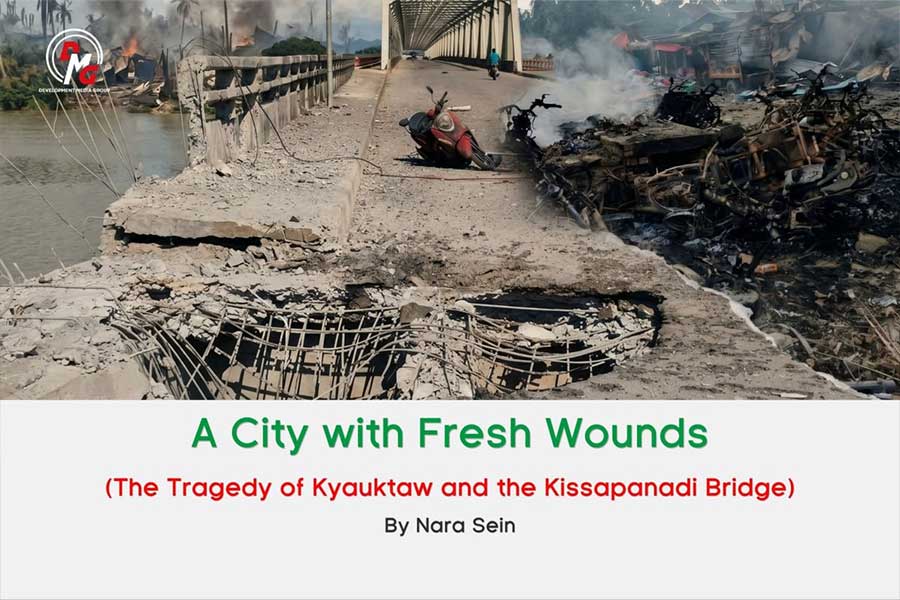
A City with Fresh Wounds (The Tragedy of Kyauktaw and the Kissapanadi Bridge)
By Admin 01 Oct 2026

Arakan Army’s Gains and the Changing Geopolitics of Arakan
By Admin 29 Sep 2026

Beyond Military Victory: What Is Myanmar’s Ultimate Political Objective?
By Admin 26 Sep 2026

UN at a Crossroads: Six Priorities for a Shared Future
By Admin 23 Sep 2026
.jpg)
How Can Myanmar’s Political Crisis Be Brought to an End?
By Admin 13 Sep 2026
POLITICS



BUSINESS
Industry to manufacture finished goods from coconut starting in early 2020
By Aung Kaung Zaw 20 Nov 2019