
- Magway records most airstrikes since new military chief took command: ISP-Myanmar
- Junta warship destroys two fishing boats, seizes another off Werathani
- Junta jet fighters drop 500-pound bombs on former junta battalions in Mrauk-U
- Junta deploys fighter jets to bomb Ponnagyun
- Rathedaung villagers set up night watches amid Sittwe clashes, ARSA threat
Editorial: World Must Wake Up: The Junta’s Expanding Air Campaign in Arakan Is a Human Rights Emergency
December 10 should have been a day to reaffirm the universality of human rights — the right to life, health, safety, and education. Instead, as Myanmar marked International Human Rights Day, the military junta launched a devastating airstrike on Mrauk-U Public Hospital in Arakan State, killing more than 30 people and injuring over 70 — patients, caregivers, and ordinary civilians seeking medical care.
11 Dec 2025
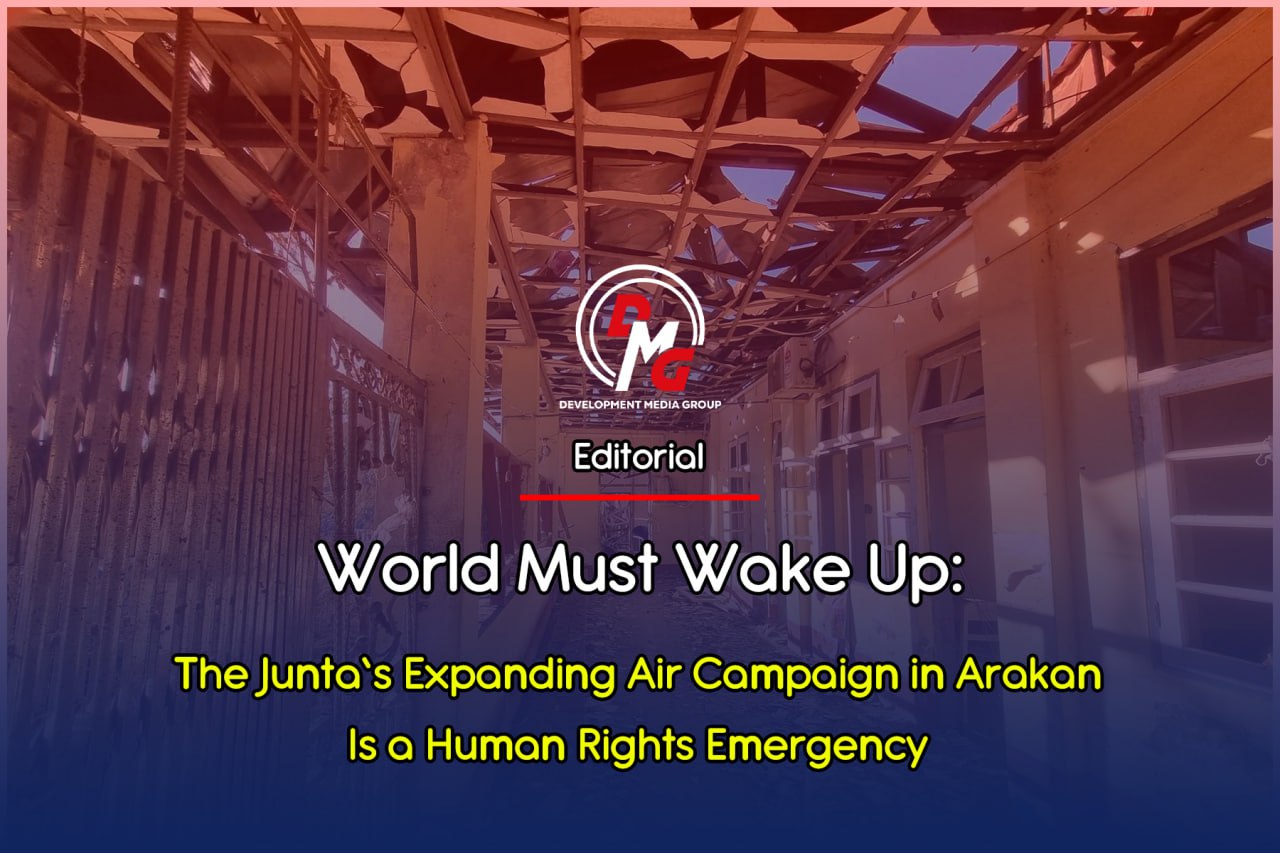
December 10 should have been a day to reaffirm the universality of human rights — the right to life, health, safety, and education. Instead, as Myanmar marked International Human Rights Day, the military junta launched a devastating airstrike on Mrauk-U Public Hospital in Arakan State, killing more than 30 people and injuring over 70 — patients, caregivers, and ordinary civilians seeking medical care. The blast destroyed vital health infrastructure, deepening an already severe humanitarian crisis.
This attack is not an isolated incident. Across Arakan State, the junta’s aerial campaign has repeatedly targeted civilian life and essential infrastructure. In recent weeks and months, air raids and shelling have killed scores of civilians — including children — and have destroyed schools, homes, and displacement sites. In November alone, a week-long series of airstrikes across Arakan killed at least 20 civilians and injured dozens more, disrupting daily life and forcing thousands into fear and displacement.
Airstrikes this year have also taken civilian lives far beyond Arakan — including deadly attacks on tea shops in Sagaing, where villagers were watching a football match. These incidents underscore a painful truth: there is no safe space left for ordinary people, even in settings once considered peaceful.
Human rights organizations and UN monitors have repeatedly warned that such attacks constitute indiscriminate use of force — including against protected civilian objects such as hospitals, schools, religious buildings, and markets. These are clear violations of international humanitarian law and, in many cases, what legal experts describe as war crimes.
The junta’s escalation comes as it moves ahead with sham elections later this month — a process widely dismissed internationally as a quest for legitimacy rather than a genuine democratic exercise. Several governments have expressed concern about rising violence, worsening humanitarian conditions, and the military’s growing disregard for civilian protection.
But condemnation alone is no longer sufficient. What is urgently required is concrete international action to protect civilians and ensure accountability. The United Nations, ASEAN, and key member states must prevent the junta from maintaining operational capacity — including restricting access to aviation fuel, arms, and financial resources that enable its air campaign. Independent monitoring, humanitarian access, and targeted sanctions against those responsible for ordering and carrying out attacks on civilians must be prioritized.
As the world commemorates International Human Rights Day, we must confront an undeniable reality: in Myanmar, basic rights are under systematic and escalating assault. Children should be learning in classrooms, not running from bombs. Patients should be recovering in hospital wards, not lying in rubble. Schools and hospitals are not military targets; they are protected spaces that should never be touched by the violence of war.
The international community must stop turning away. Lives depend on urgent, coordinated intervention grounded in international law and a genuine commitment to human rights. Anything less is a betrayal of the principles the world claims to uphold.

Opinion
.jpg)
How Can Myanmar’s Political Crisis Be Brought to an End?
By Admin 13 Sep 2026

By Cutting Trees, We Are Killing Ourselves
By Admin 06 Sep 2026
A Modern August We Must Never Forget
By Admin 31 Aug 2026
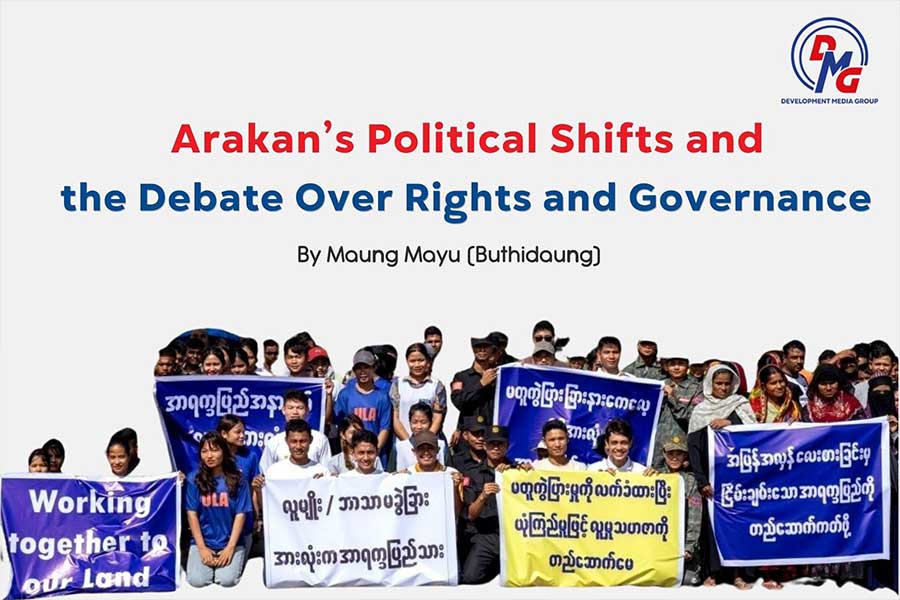
Arakan’s Political Shifts and the Debate Over Rights and Governance
By Admin 27 Aug 2026
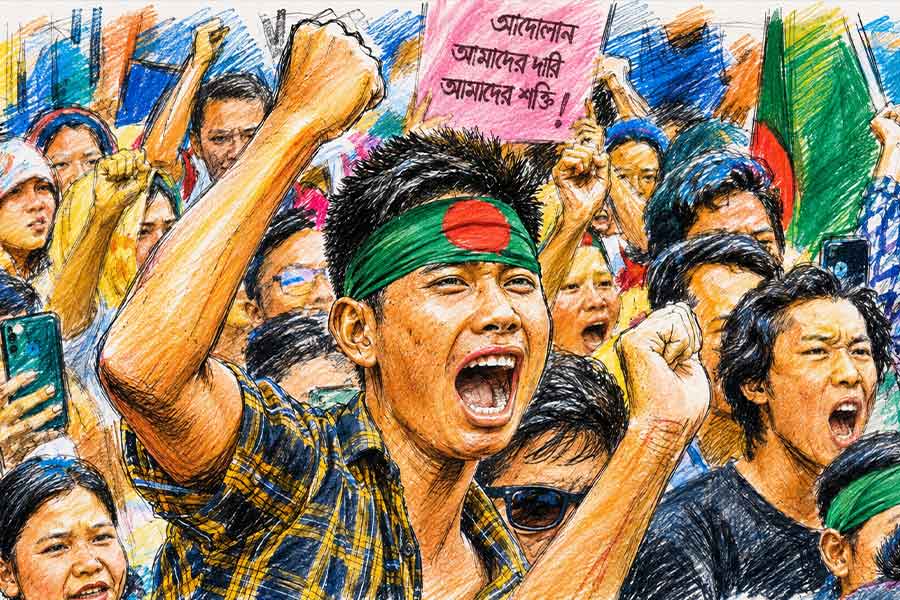
Securing Rights for Bangladesh's Indigenous Peoples is Indispensable
By Admin 09 Aug 2026
POLITICS

BUSINESS
Industry to manufacture finished goods from coconut starting in early 2020
By Aung Kaung Zaw 20 Nov 2019