


- Over 150 Kyauktaw villagers face displacement as Kaladan River erodes banks
- Malaria cases surge across Ann Twsp as residents struggle to access healthcare
- Arakan’s elderly face deepening crisis amid war: CAS study
- ULA detains Arakanese merchants over Khaikhy dispute, moves to resolve issue
- Arakan Army captures four junta outposts on Sittwe-Ponnagyun front
Arakan State’s winter crop farmers face losses
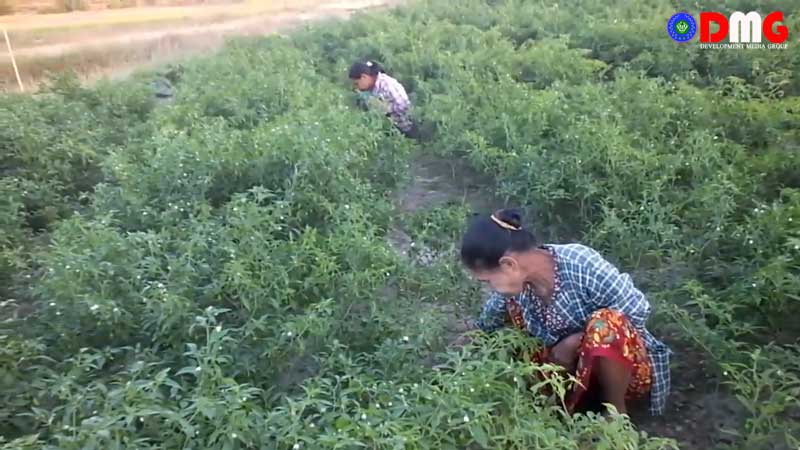
Winter crop farmers in Arakan State are facing losses this year as agricultural expenditures have significantly increased.
07 Jan 2022
DMG Newsroom
7 January 2022, Maungdaw
Winter crop farmers in Arakan State are facing losses this year as agricultural expenditures have significantly increased.
Rising fertiliser prices have been among the most burdensome of additional expenses for farmers since the February 1 military coup.
Yields are also lower as many farmers cannot use enough fertiliser due to its increased cost, said Ko Hla Maung Shwe, a farmer from Tharyar Gone village in Maungdaw Township.
He said that he saw more than 50% profit from his eggplant plantations in previous years, but he faces more than 50% loss this year.
The price of a bottle of pesticide was K1,500 in previous years, but has risen to K4,000, farmers said.
“A bag of fertiliser was about K30,000 in the past, but it is now nearly K90,000,” U Saw Shwe Maung, a flower grower from Tharyar Gone village in Maungdaw Township, told DMG.
“The price of fertiliser has more than doubled and we are facing difficulty doing our business. I grow aster and gladiolus and I face losses as my flowers do not fetch a good price,” he said.
Farmers say the prices of agricultural equipment and seeds, as well as labour costs, have also increased.
“We cannot take care of our plantation as before because of the high price for everything. So, the yield is lower. The winter crops in Arakan State are sold domestically only,” said Daw Mae Ma Sein, a winter crop grower.
Ma Khin Nyunt, a vegetable vendor, said the current prices she is paying to purchase vegetables from farmers are higher too, in an indication that farmers’ rising expenditures are being passed on to consumers.

Top News

Over 150 Kyauktaw villagers face displacement as Kaladan River erodes banks
By Admin 21 Sep 2026

Media outlets can verify Arakan State news through Justice For Arakan: ULA official
By Admin 20 Sep 2026
Paddy cultivation in Arakan State shrinks to around 500,000 acres
By Admin 19 Sep 2026

Junta navy detains eight Muslim fishermen in Werathani, abandons them at sea
By Admin 19 Sep 2026
Malaria cases surge across Ann Twsp as residents struggle to access healthcare
By Admin 19 Sep 2026





.jpg)