
- ULA detains Arakanese merchants over Khaikhy dispute, moves to resolve issue
- Arakan Army captures four junta outposts on Sittwe-Ponnagyun front
- Magway records most airstrikes since new military chief took command: ISP-Myanmar
- Junta warship destroys two fishing boats, seizes another off Werathani
- Junta jet fighters drop 500-pound bombs on former junta battalions in Mrauk-U
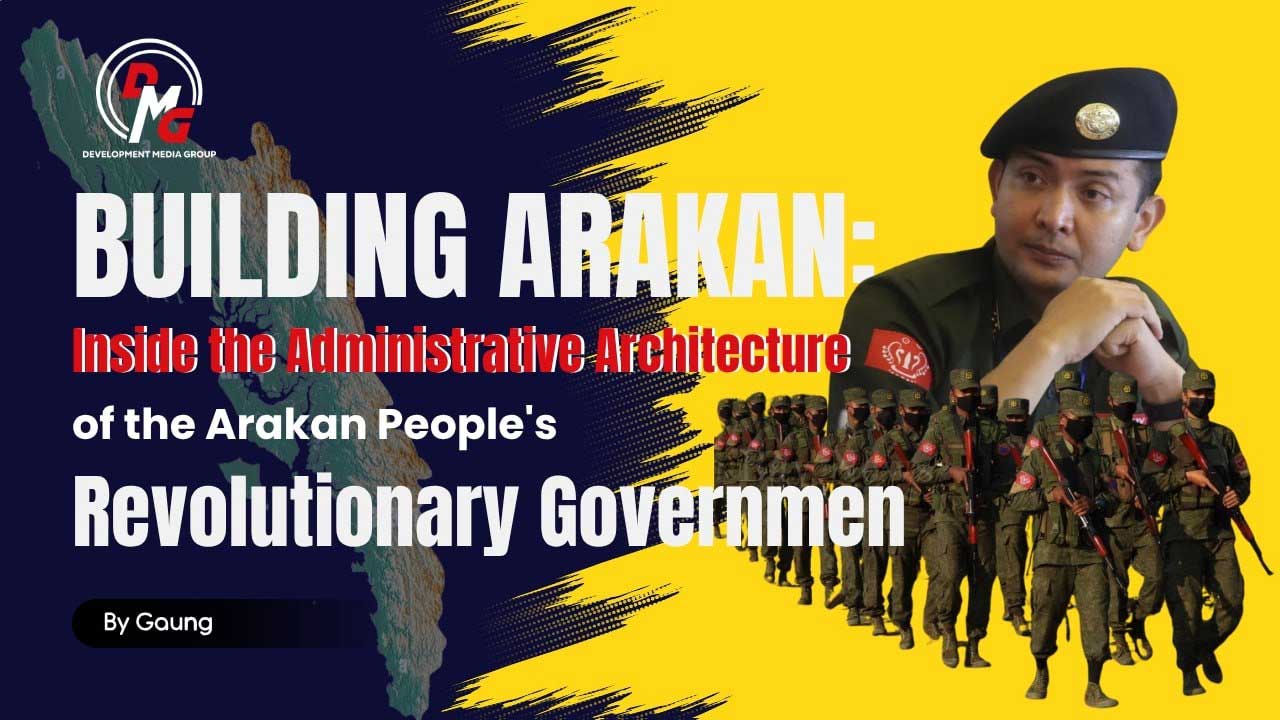
Building Arakan: Inside the Administrative Architecture of the Arakan People's Revolutionary Government
A bright red Arakan flag flutters in the wind outside a government building somewhere in Arakan. Inside, visitors are greeted by a clean administrative office, official desks, the Arakan national flag displayed prominently on the wall, and a portrait of Arakan Army Commander-in-Chief Major General Twan Mrat Naing.
20 Jun 2026
By Gaung
A bright red Arakan flag flutters in the wind outside a government building somewhere in Arakan. Inside, visitors are greeted by a clean administrative office, official desks, the Arakan national flag displayed prominently on the wall, and a portrait of Arakan Army Commander-in-Chief Major General Twan Mrat Naing.
This is not a military headquarters. It is a township-level administrative office of the Arakan People's Revolutionary Government (APRG), the governing apparatus established by the United League of Arakan/Arakan Army (ULA/AA).
"What you see today is only the beginning of freedom," said a 38-year-old APRG administrative official. "There are many challenges ahead, and we still have a long journey to travel. Difficulties are inevitable, but we must overcome them."
His remarks reflect a transformation that has taken place across much of Arakan over recent years. As the Myanmar military's authority has receded across large areas of the state, the ULA/AA has steadily expanded not only its military influence but also its administrative reach.
Today, the APRG is attempting something far more ambitious than battlefield success: building the foundations of a functioning state.
From Armed Resistance to Governance
For more than two centuries, Arakan lost its sovereignty under successive Burmese kingdoms, British colonial rule, Japanese occupation, and successive governments in independent Myanmar.
The contemporary Arakan movement emerged with the formation of the United League of Arakan (ULA) in 2016 as the political leadership body of the Arakan Army.
As conflict intensified, the organization established the Arakan People's Authority (APA) in 2019, initially focusing on rural governance in areas beyond the effective control of the Myanmar state.
Following major territorial gains during recent military campaigns, the administration evolved into what is now known as the Arakan People's Revolutionary Government.
According to officials, governance is organized through a multi-layered structure extending from village and village-tract levels through townships and districts to a central administration.
"Administrative responsibilities move step by step from villages to village tracts, townships, districts and the central level," one official explained. "We work together with DLEPS [the law enforcement and public security department], while defense responsibilities remain with the Arakan Army."
What has emerged resembles a proto-state bureaucracy operating alongside an active armed struggle.
Building a Government Structure
The APRG now operates through more than ten government departments responsible for civilian administration.
These include:
• Administration
• Judiciary
• Health
• Education
• Transportation
• Taxation and Customs
• Municipal Affairs
• Fire Services
• Forestry and Natural Resources
• Agriculture and Livestock
• Corrections
• Technology and Communications
The administration has also established the Arakan School of Public Policy and Administration (ASSPA), designed to train future generations of civil servants and administrators.
Officials say courses are taught by local experts, scholars from elsewhere in Myanmar, and international academics, reflecting efforts to professionalize governance institutions.
The establishment of such structures illustrates the ULA/AA's long-term objective: moving beyond military control toward institutional governance.
The Eight-District System
One of the most significant administrative reforms has been the transition from military zones to a district-based civilian administrative system.
The APRG has divided its areas of control into eight districts:
1. Sittwe District
2. Maungdaw District
3. Mrauk-U District
4. Minbya District
5. Thandwe District
6. Kyaukphyu District
7. Taungup District
8. Paletwa District
These districts encompass most of the territories currently administered by the ULA/AA.
Officials say the objective is to create a more systematic governance structure capable of delivering public services including healthcare, education, transportation, and judicial administration.
While many services remain limited by war conditions, the administrative system increasingly resembles that of a conventional government.
The Judiciary: Building Legitimacy Through Law
Among the most important state-building efforts has been the development of an independent judicial system.
The ULA/AA began implementing judicial mechanisms around 2020, initially focused on rural communities.
Today the system includes:
• Township courts
• District courts
• Central courts
• Civilian judges
• Judicial officers
According to legal professionals working within the system, much of the legal framework continues to rely on laws inherited from the British colonial period, many of which remain in use across Myanmar.
"Corruption is almost nonexistent in our courts," said one lawyer working within the judicial department. "We also do not see interference from the AA in judicial decisions. The judiciary operates independently."
Courts handle criminal cases, civil disputes, property transactions, and land disputes, although complex land cases remain challenging.
Legal fees are generally limited. Civil cases incur a five-percent fee, while criminal proceedings require only minimal administrative costs.
The judicial system remains a key source of legitimacy for the administration, particularly in areas where residents have long complained about corruption and inefficiency under previous governments.
Financing Governance Through Taxation
Like any government, the APRG requires revenue.
To fund public services, the administration has established a taxation system that collects revenue from businesses, shops, vehicles, and trade.
Tax collection reportedly began in 2022 among larger businesses and has since expanded to include small shops and local enterprises.
Shop owners report annual fees ranging from approximately 30,000 to 100,000 kyats depending on business size.
Taxes are also levied on:
• Boats
• Tractors
• Cars
• Three-wheel vehicles
• Commercial transport
For cross-border trade routes, essential food items are reportedly exempt, while other goods are generally taxed at around three percent.
The administration has also introduced an official lottery system known locally as "Arakkha Lottery." According to officials, half of lottery revenue is distributed as prize money while the remaining half is allocated to infrastructure, education, healthcare, and development projects.
Public Starlink internet services have also been introduced in some areas under ULA/AA control, managed by the administration's technology department.
However, transparency remains a concern. The administration has yet to publicly disclose detailed information regarding annual tax revenues or expenditure.
DLEPS: Law Enforcement and Public Security
As governance expanded, the ULA/AA established the Department of Law Enforcement and Public Security (DLEPS), functioning as a civilian police force.
DLEPS handles:
• Criminal investigations
• Public security
• Traffic enforcement
• Social disputes
• Drug-related offenses
Drug trafficking has become a major focus.
Under regulations issued by the administration, individuals convicted of manufacturing, distributing, or selling narcotics may face severe penalties ranging from lengthy prison sentences to capital punishment.
Many local residents support these measures, viewing narcotics as a growing threat to social stability.
However, allegations have also emerged that some officials within ULA institutions have been involved in drug-related activities.
The administration has publicly acknowledged such concerns and has arrested individuals, including DLEPS personnel, accused of involvement in narcotics trafficking.
These cases highlight both the challenges and contradictions faced by an emerging governing authority attempting to enforce law while maintaining public trust.
Environmental Governance
The APRG has also begun introducing environmental regulations.
In early 2026, authorities issued warnings against hunting endangered wildlife species and announced restrictions on logging.
Under current rules, residents may harvest up to one ton of timber annually for household and agricultural use without taxation.
The administration has also prohibited the killing, poisoning, or sale of protected marine species including:
• Sea turtles
• Dugongs
• Sharks
• Dolphins
• Whales
While environmental protections have been welcomed by some conservationists, others argue that restrictions may be difficult to implement in economically vulnerable communities that depend on natural resources.
Building Political Institutions
Beyond governance structures, the ULA is actively developing itself as a political organization.
Major General Twan Mrat Naing previously stated that Arakan's future governance model would initially be centralized but would eventually devolve authority based on administrative capacity.
Party officials say the ULA aims to become the principal political organization representing Arakan society.
The party is recruiting new members, conducting political education programs, promoting humanitarian activities, and encouraging participation by educated young people.
Officials argue that strong political institutions are necessary to ensure accountability and long-term governance beyond the current conflict.
Education: Rebuilding a Lost Generation
Education remains one of the administration's most ambitious priorities.
Years of conflict disrupted schooling for thousands of young people across Arakan.
Since late 2024, the education department has expanded home-based learning programs and rebuilt educational structures.
The system now includes:
• Township education committees
• District education committees
• Examination boards
• Teacher training institutions
• Higher education departments
Plans are underway to offer university-level programs in subjects including:
• Myanmar language
• English
• History
• Geography
• Philosophy
• Psychology
• Law
• Economics
• International Relations
• Political Science
Many young people see these developments as a rare source of hope amid prolonged conflict.
"For many years young people had no opportunities," said one youth activist. "Some left for other countries. Others abandoned their studies. Now there is a chance to continue pursuing our goals."
Yet security concerns remain severe. Airstrikes continue to threaten schools and educational facilities throughout the region.
Healthcare Under Siege
Healthcare remains one of the administration's greatest challenges.
The military blockade of trade routes has contributed to chronic shortages of medicines, equipment, and specialized personnel.
Healthcare services are currently provided by former government medical staff, CDM doctors, and local healthcare professionals.
Specialist services remain extremely limited.
Residents report severe shortages of:
• Obstetricians and gynecologists
• Surgical equipment
• Emergency medical devices
• Essential medicines
Pregnant women often travel long distances across difficult terrain to access treatment.
The situation is further complicated by repeated military airstrikes targeting civilian infrastructure, including hospitals and clinics.
Despite these challenges, the administration has launched training programs for nurses, midwives, and healthcare workers and established institutions including the Arakan Medical Science School and Arakan Nursing Science School.
According to Major General Twan Mrat Naing, more than 60 doctors are currently serving in areas under AA control.
Governance Challenges and Public Criticism
While many residents praise improvements in governance, significant criticisms remain.
Women and children's rights advocates argue that judicial responses to sexual violence and child abuse cases remain inadequate.
Several high-profile rape and murder cases have generated public frustration due to lengthy investigations and delays in sentencing.
Although suspects have often been arrested, victims' families and activists continue to call for greater transparency and accountability.
Similarly, criticism has emerged regarding implementation of the National Defense Emergency Provision (NDEP), which requires military service for eligible residents.
Some families allege that young people traveling for trade or employment have been detained and directed into military training programs despite possessing travel authorization documents.
Supporters argue that national defense remains essential given ongoing threats from the Myanmar military and armed groups operating along the Bangladesh border.
The controversy reflects broader tensions between wartime necessities and civil liberties.
Social Cohesion and Ethnic Relations
One of the administration's most notable objectives is the promotion of what it describes as "Unity in Diversity."
The ULA/AA has established ethnic affairs committees representing communities including:
• Mro
• Khami
• Thet
• Maramagyi
• Kaman
• Chin
• Muslim communities
Residents from diverse backgrounds report improved intercommunal relations compared with previous periods.
Several minority representatives interviewed for this article described greater inclusion in local governance and decision-making processes.
The reopening of the historic Jamae Mosque in Maungdaw in 2025, after more than a decade of closure, was widely viewed as a symbolic gesture supporting religious coexistence.
While challenges remain, many residents believe social relations have improved significantly.
Resilience in a Time of War
Despite administrative progress, Arakan remains a conflict zone.
The population continues to endure:
• Airstrikes
• Economic hardship
• Trade restrictions
• Displacement
• Humanitarian challenges
Yet many residents express remarkable resilience.
For supporters of the Arakan movement, the current moment represents the culmination of decades of political struggle.
Today, the AA faces military challenges across multiple fronts while simultaneously attempting to govern territory, deliver services, and build institutions.
The combination of military resistance and state-building has become one of the defining features of contemporary Arakan.
One Step from a Historic Milestone
The ULA/AA leadership has repeatedly stated that the Arakan national revolution is approaching its final stage.
Having gained control over most of Arakan, the movement now seeks not only military victory but also the construction of durable governing institutions capable of sustaining a future political order.
Across many government offices, the red Arakan flag now flies where Myanmar state authority once dominated.
For supporters, it symbolizes sovereignty, self-determination, and the realization of long-held aspirations.
For critics, questions remain regarding accountability, inclusion, transparency, and the future political model of Arakan.
What is undeniable, however, is that the ULA/AA has moved far beyond being solely an armed organization.
It is building courts, schools, hospitals, tax systems, police forces, political institutions, and administrative structures while continuing to wage war.
Whether this experiment ultimately succeeds will depend not only on military outcomes but also on its ability to deliver effective governance, uphold justice, protect rights, and maintain public trust.
The future of Arakan may therefore be determined not only on the battlefield, but also in the institutions now being constructed across the territory.

Top News
ULA detains Arakanese merchants over Khaikhy dispute, moves to resolve issue
By Admin 18 Sep 2026
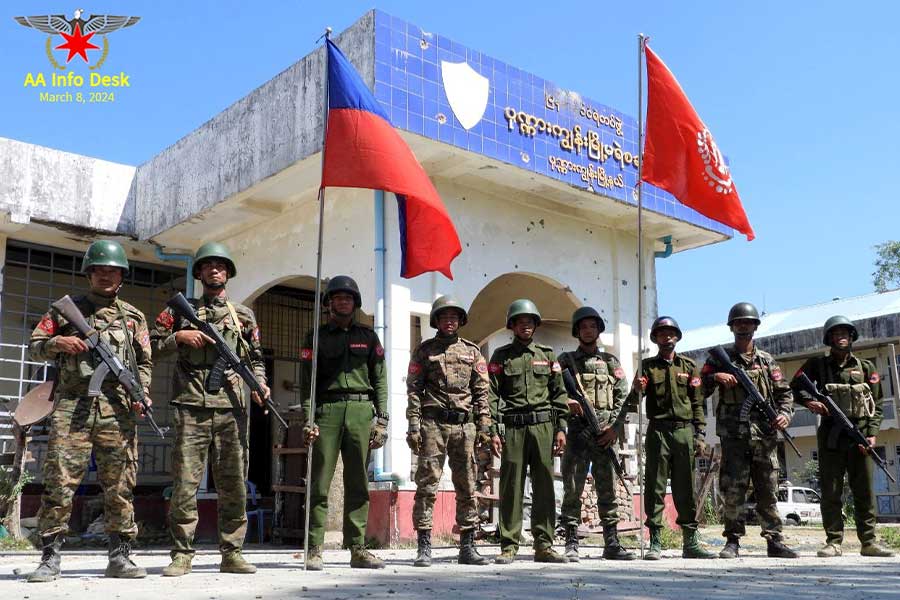
Arakan Army captures four junta outposts on Sittwe-Ponnagyun front
By Admin 18 Sep 2026
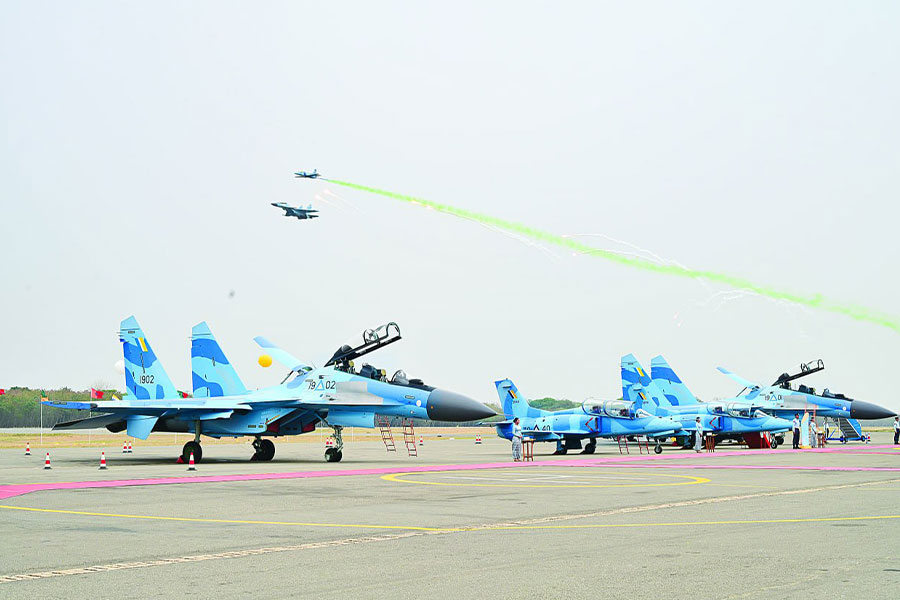
Magway records most airstrikes since new military chief took command: ISP-Myanmar
By Admin 17 Sep 2026
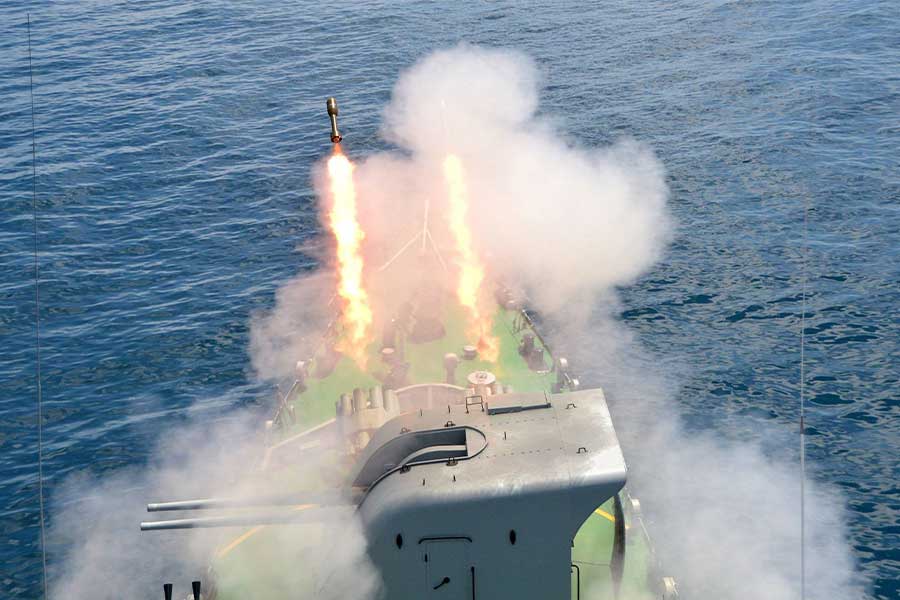
Junta warship destroys two fishing boats, seizes another off Werathani
By Admin 17 Sep 2026
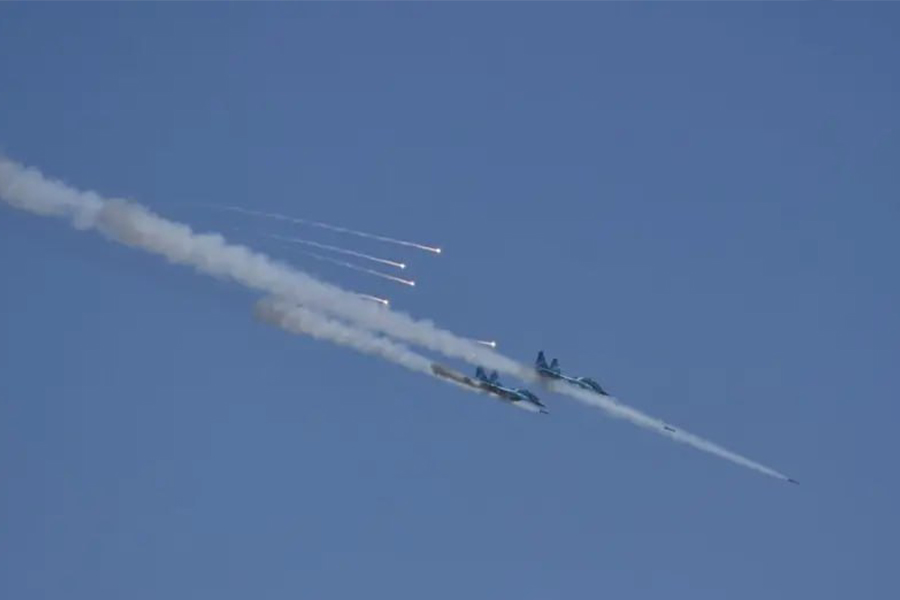
Junta jet fighters drop 500-pound bombs on former junta battalions in Mrauk-U
By Admin 17 Sep 2026