
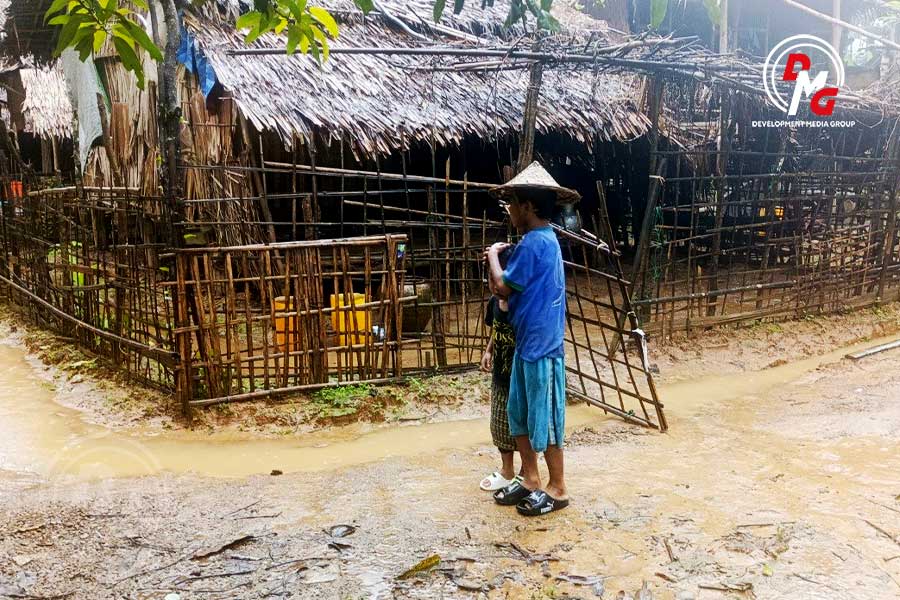
- Malaria cases surge across Ann Twsp as residents struggle to access healthcare
- Arakan’s elderly face deepening crisis amid war: CAS study
- ULA detains Arakanese merchants over Khaikhy dispute, moves to resolve issue
- Arakan Army captures four junta outposts on Sittwe-Ponnagyun front
- Magway records most airstrikes since new military chief took command: ISP-Myanmar
Potential implications of meeting between Daw Aung San Suu Kyi and ICRC representative
Political analysts view the junta's decision to allow the ICRC to meet with Daw Aung San Suu Kyi as a concession to international and ASEAN demands, describing it as an initial step toward seeking a political way out.
04 Aug 2026
DMG Newsroom
4 August 2026, Nay Pyi Taw
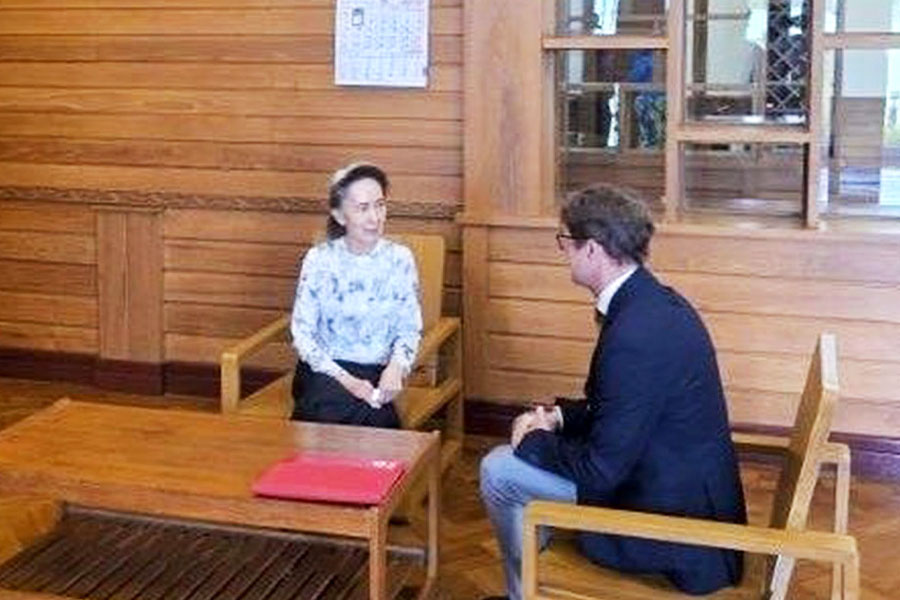
Both the military regime and the International Committee of the Red Cross (ICRC) issued statements on August 3 confirming that detained State Counsellor Daw Aung San Suu Kyi met with Mr. Arnaud de Baecque, head of delegation for the ICRC in Myanmar.
While the military regime did not disclose details of the meeting, the ICRC said the discussion remains confidential and that information will only be shared with prison authorities under the junta.
Political analysts view the junta's decision to allow the ICRC to meet with Daw Aung San Suu Kyi as a concession to international and ASEAN demands, describing it as an initial step toward seeking a political way out.
Ko Tein Oo, former secretary of the All Arakan Students' and Youths' Congress (AASYC), said: "The regime still hasn't secured a seat in ASEAN and remains barred from attending top-level summits, so it has created this situation to show that it is allowing meetings with Daw Aung San Suu Kyi. The military regime has historically detained politicians like birds in a cage, only to bring them out and exploit them whenever necessary."
He added that by allowing her to meet only with the ICRC while denying access to her son, lawyers and party members, the military regime appears to be attempting to portray Daw Aung San Suu Kyi as an ordinary prisoner.
Meanwhile, with the military regime announcing plans to hold a by-election in 2027, some analysts believe the junta is attempting to use Daw Aung San Suu Kyi politically to bolster the legitimacy of its planned election.
Political analyst Ko Khaing Sar said: "The military regime has always viewed Daw Aung San Suu Kyi as a political key and has exploited her accordingly. They will ultimately use her politically. I don't think they will release her before 2027. It is certain that negotiations are taking place behind closed doors. However, Daw Aung San Suu Kyi and the National League for Democracy will not participate in the 2027 by-election. This time, the political role of the NLD and Daw Suu will be far more complex."
Analysts said that, while facing nationwide armed resistance and international sanctions since the 2021 military coup, the regime is attempting to use Daw Aung San Suu Kyi as a bargaining chip to navigate its ongoing political crisis.
Ko Khaing Sar also said the military, after losing territory and suffering setbacks on the battlefield, could attempt to use Daw Aung San Suu Kyi to create political divisions between Spring Revolution forces and ethnic armed organizations.
"If the regime releases Daw Aung San Suu Kyi, it might have a limited impact on People's Defence Forces (PDFs) within the Spring Revolution, but the likelihood of influencing Ethnic Armed Organizations (EAOs) and Local Defence Forces (LDFs) is extremely low. The younger generation in this Spring Revolution has matured politically, and they will not be foolish enough to fall into the regime's strategic trap again," Ko Khaing Sar said.
Following the 2021 military coup, the regime arrested Daw Aung San Suu Kyi and sentenced her to more than 50 years in prison across 19 cases. In April, the junta announced that she had been transferred from Nay Pyi Taw Prison to another residential location.
While the regime is seeking ways to address domestic armed resistance and international sanctions, political analysts said Myanmar's current political crisis can no longer be resolved solely through the release of Daw Aung San Suu Kyi, but requires consensus among Spring Revolution forces and ethnic armed organizations.

Top News
Malaria cases surge across Ann Twsp as residents struggle to access healthcare
By Admin 19 Sep 2026
Arakan’s elderly face deepening crisis amid war: CAS study
By Admin 19 Sep 2026
ULA detains Arakanese merchants over Khaikhy dispute, moves to resolve issue
By Admin 18 Sep 2026
Arakan Army captures four junta outposts on Sittwe-Ponnagyun front
By Admin 18 Sep 2026
Magway records most airstrikes since new military chief took command: ISP-Myanmar
By Admin 17 Sep 2026

.jpg)