

- Magway records most airstrikes since new military chief took command: ISP-Myanmar
- Junta warship destroys two fishing boats, seizes another off Werathani
- Junta jet fighters drop 500-pound bombs on former junta battalions in Mrauk-U
- Junta deploys fighter jets to bomb Ponnagyun
- Rathedaung villagers set up night watches amid Sittwe clashes, ARSA threat
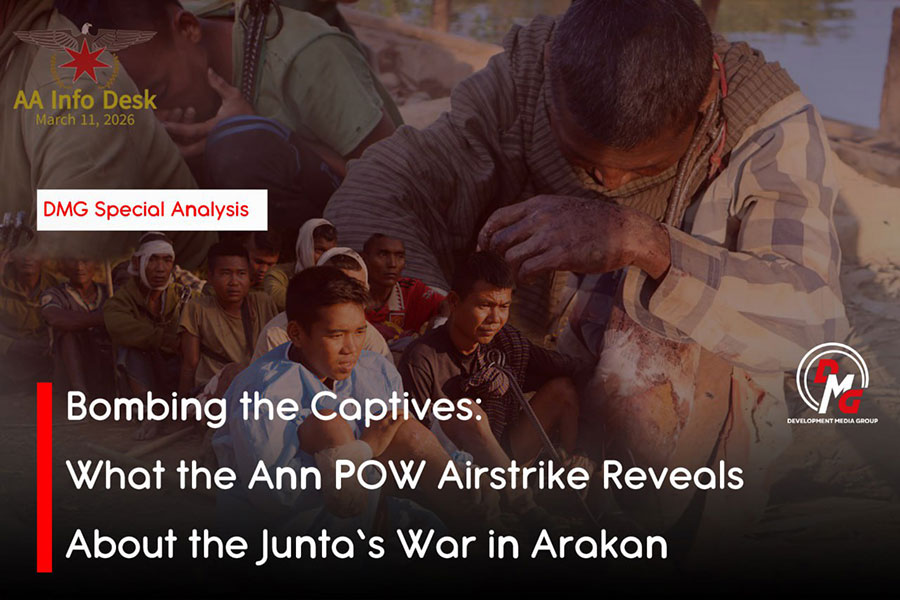
Bombing the Captives: What the Ann POW Airstrike Reveals About the Junta’s War in Arakan
The March 8, 2026 airstrike on a prisoner-of-war detention camp in the Darlatchaung area of Ann Township may come to be seen as one of the most revealing incidents of the Arakan war.
14 Mar 2026
DMG Special Analysis
The March 8, 2026 airstrike on a prisoner-of-war detention camp in the Darlatchaung area of Ann Township may come to be seen as one of the most revealing incidents of the Arakan war.
According to the Arakan Army (AA), the Myanmar military carried out sustained bombing runs for more than three hours using four jet fighters and four Y-12 aircraft. The result, by preliminary count, was catastrophic: 116 prisoners of war and detainees killed, 32 wounded, and many others injured to varying degrees. Among the dead, according to captured Western Regional Military Command Deputy Commander Brigadier General Thaung Tun, were Brigadier General Myint Shwe, several major-ranked officers, and military medical staff. Some civilians serving prison sentences were reportedly also killed in the same strike.
If confirmed, this was not only the deadliest known airstrike on a POW detention site in Arakan. It was also something more disturbing: a military apparently bombing a detention facility it knew contained its own captured personnel.
That is why the Ann incident deserves analysis not simply as another atrocity in a brutal war, but as a window into the deeper logic, desperation, and moral collapse now shaping the junta’s conduct in Arakan.
1. Why the Ann strike matters
Arakan has already seen airstrikes on villages, schools, hospitals, detention sites, and displacement areas. By now, the pattern of indiscriminate or deliberate aerial violence is well established. But the Ann strike occupies a different category because of the identity of those inside the camp.
These were not active combatants on a frontline. They were captured officers, soldiers, military medical personnel, and detainees. Under international humanitarian law, once combatants are captured and held, they cease to be lawful military targets. Their detention does not erase their humanity; it strengthens their legal protections.
For that reason, if the camp was knowingly targeted, the strike was not simply another battlefield excess. It was a direct assault on one of the most basic norms of war: that captives must be protected, not exterminated.
The significance of Brigadier General Thaung Tun’s testimony lies here. He did not merely describe the devastation. He stated that reconnaissance flights had been conducted in advance and that the facility was visibly identifiable as a prison compound, with structured buildings, guard arrangements, and detainees wearing prison uniforms. His account suggests not confusion, but recognition.
His conclusion was blunt: it was a cruel act.
2. A pattern, not an accident
The Ann strike did not occur in isolation. It fits into a broader pattern of air attacks on sites where AA-held prisoners were being kept.
Based on DMG information, the junta has carried out six aerial attacks on detention sites holding AA-captured POWs, even though those areas were no longer active battle zones. Across these six incidents, 226 prisoners of war and family members were reportedly killed and 93 injured.
The attacks include:
• September 9, 2024 — Shin Ywar camp in Pauktaw Township and Border Guard Police Battalion No. 2 in Maungdaw Township
• January 18, 2025 — Ram Chaung camp in Mrauk-U Township
• February 28, 2025 — Border Guard Police Battalion site in Maungdaw
• January 20, 2026 — Chaung Tu camp on the Kyauktaw–Ponnagyun border
• March 8, 2026 — Darlatchaung camp in Ann Township
This repeated targeting makes the language of “mistake” increasingly difficult to sustain. One misidentification might be explained by the fog of war. Six similar incidents over two years, in places where detainees were being held, suggests something far more systematic.
That is why the Ann strike may mark not merely the deadliest incident in this pattern, but the one that makes the pattern impossible to ignore.
3. What this says about the junta’s military position
The strike must also be understood within the broader battlefield context.
Over the past two years, the Myanmar military has lost extensive ground across Arakan. The United League of Arakan/Arakan Army (ULA/AA) now exercises de facto control over most of the state. The junta’s shrinking territorial presence has fundamentally altered the nature of the war: it no longer governs much of the ground it bombs.
This matters because the Ann strike reflects a broader strategic shift. As the junta loses physical control, it increasingly relies on airpower to impose fear, disrupt governance, and punish areas beyond its reach.
Seen through this lens, the bombing of detention facilities fits a broader war logic:
- If the junta cannot recover its soldiers, it can deny the enemy the ability to hold them.
- If it cannot re-enter territory, it can still terrorize from the air.
- If it cannot reverse battlefield defeat, it can make governance in AA-held areas more costly and unstable.
This does not make the strike militarily rational in the long term. It simply reflects the kind of logic that emerges when a military increasingly substitutes air-delivered destruction for territorial control.
4. A collapse of military ethics from within
What makes the Ann strike particularly significant is that condemnation did not come only from the AA or civilians, but from captured junta personnel themselves.
Sergeant Major Thein Lwin, who served in the Myanmar military for 34 years and survived the bombing, described the strike as betrayal. He asked a fundamental moral question: if they were no longer armed and were already detained, why were they attacked?
He contrasted the junta’s bombing with the treatment he said prisoners had received in captivity, including medical care and assurances that they would one day be reunited with their families.
Brigadier General Kyaw Kyaw Than went further. He openly questioned whether repeated bombings of detention camps suggest the military no longer intends to retrieve captured personnel or has abandoned them entirely.
These statements strike at the heart of military cohesion. Armies depend not only on weapons but on belief, belief that commanders value the lives of subordinates, that surrender will not automatically mean abandonment, and that the institution maintains some obligation toward its own personnel.
If captured soldiers begin to believe they are expendable even in detention, the military’s internal legitimacy begins to erode.
5. The contrast that deepens the political damage
Several testimonies described AA personnel breaking open prison doors and rescuing detainees while bombs were still falling. Brigadier General Thaung Tun credited AA members and other detainees with preventing a far higher death toll.
Another former soldier and POW, Aung Myo Myat, also described humane treatment in detention and rescue efforts during the strike.
These testimonies should always be read carefully in wartime. But politically, they matter.
If captured junta personnel publicly state that they were treated humanely by their captors while being bombed by their own side, the propaganda damage to the junta becomes severe. The narrative reverses: the state appears as destroyer, while the enemy appears as rescuer.
In any conflict, that is a devastating contrast.
6. The humanitarian dimension
Beyond military and political implications lies the immediate human toll.
Bodies were reportedly burned beyond recognition. Some remain missing. Families do not know whether their relatives were killed, wounded, or left unidentifiable in the ruins.
Daw Thida Soe, the wife of one missing POW, expressed the anguish of many families when she said it felt as if these men had been used when needed and discarded when no longer useful.
The POW camp bombing therefore becomes not only a military story but a human one — involving wives, children, parents, and relatives living with uncertainty and grief.
It also places military families themselves inside the same landscape of fear and trauma that civilians across Arakan have already experienced.
7. Legal and political implications
If these strikes were deliberate, they may constitute grave breaches of international humanitarian law. Even if the junta claims they were errors, repeated attacks on detention facilities demand serious independent scrutiny.
The legal principles are clear:
- Prisoners of war are protected persons
- Detention camps are not lawful strike targets simply because they lie in enemy-held territory
- Prior reconnaissance and repeated attacks weaken claims of misidentification
The political consequences are equally serious:
- The strike undermines the junta’s claims to professionalism
- It signals desperation rather than control
- It deepens mistrust among soldiers and military families
- It reinforces the perception that the junta’s war in Arakan is increasingly governed by punishment rather than rules
8. What the Ann strike reveals
In the end, the Darlatchaung bombing reveals several realities at once.
It reveals a junta increasingly unable to shape events on the ground and therefore resorting to airpower as its default instrument of war.
It reveals a pattern of attacks on detention sites that is becoming too consistent to dismiss as accidental.
It reveals a collapse in the military’s own moral compact with its soldiers, as survivors openly describe betrayal by their own commanders.
And it reveals that in Arakan, the boundaries of war are continuing to erode not only for civilians, but even for those who have already laid down their arms.
The Ann strike was not just an atrocity.
It was a message.
The question now is whether the world will recognize what that message means: that a war already defined by hospital bombings, school attacks, and civilian displacement has entered another phase, one in which even captivity no longer guarantees protection.
If that line has truly been crossed, the consequences will extend far beyond a single detention camp in Ann.

Opinion
.jpg)
How Can Myanmar’s Political Crisis Be Brought to an End?
By Admin 13 Sep 2026

By Cutting Trees, We Are Killing Ourselves
By Admin 06 Sep 2026
A Modern August We Must Never Forget
By Admin 31 Aug 2026
Arakan’s Political Shifts and the Debate Over Rights and Governance
By Admin 27 Aug 2026
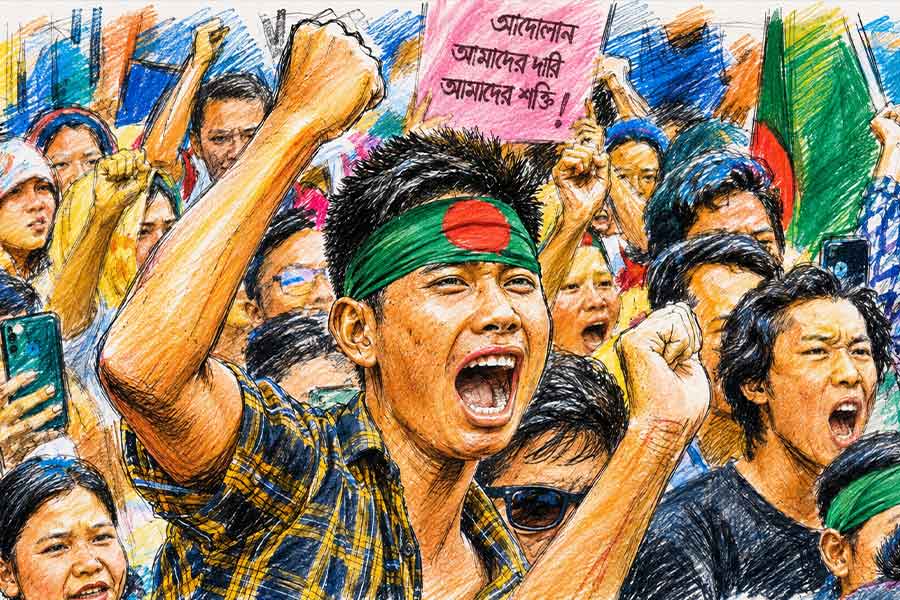
Securing Rights for Bangladesh's Indigenous Peoples is Indispensable
By Admin 09 Aug 2026
POLITICS


BUSINESS
Industry to manufacture finished goods from coconut starting in early 2020
By Aung Kaung Zaw 20 Nov 2019