
- Myanmar Navy threats leave Arakan fishing industry on the brink of collapse
- ULA pledges greater support for ethnic communities in Arakan
- Junta sends reinforcements to fiercely contested Sittwe-Ponnagyun front
- India's Kaladan project faces uncertain future amid Arakan conflict: CAS
- Myanmar records more than five landmine, ERW casualties daily
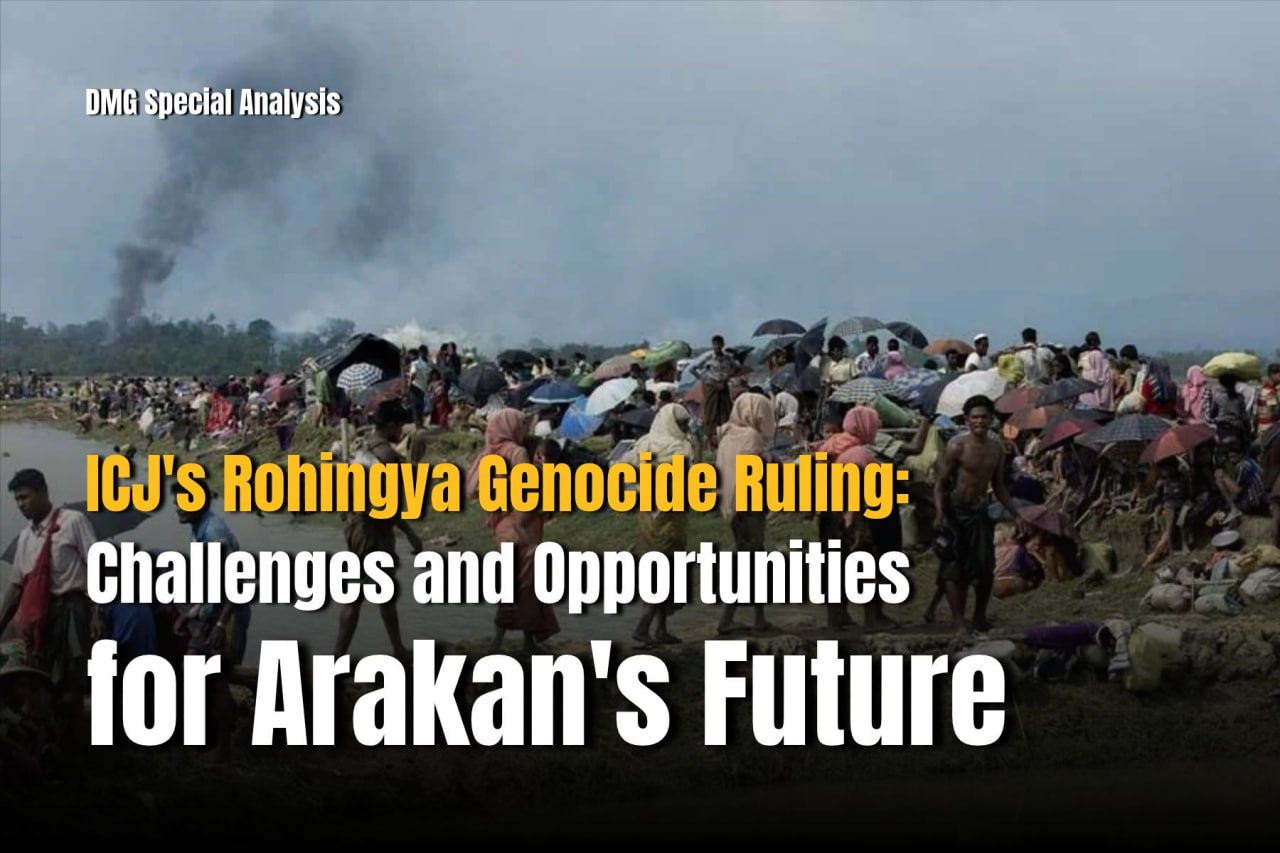
ICJ's Rohingya Genocide Ruling: Challenges and Opportunities for Arakan's Future
Although the ruling establishes Myanmar's responsibility under international law, it also highlights the challenges facing Arakan's emerging administration, particularly concerning ethnic identity, citizenship, peaceful coexistence and international engagement.
25 Nov 2026
DMG Special Analysis
The International Court of Justice's (ICJ) historic ruling that Myanmar committed genocide against the Rohingya during its 2017 military operations marks a turning point in international accountability. It also raises fundamental questions about the future of Arakan (Rakhine State), where the United League of Arakan/Arakan Army (ULA/AA) now controls most of the territory.
The November 19 judgment comes amid dramatically changed political and military realities. The ULA/AA exercises de facto authority over areas from which hundreds of thousands of Rohingya fled to Bangladesh, making its role increasingly relevant to refugee repatriation, civilian protection and intercommunal relations.
Although the ruling establishes Myanmar's responsibility under international law, it also highlights the challenges facing Arakan's emerging administration, particularly concerning ethnic identity, citizenship, peaceful coexistence and international engagement.
These challenges could also create opportunities for practical cooperation with Bangladesh, the United Nations and other regional and international actors.
The ICJ Judgment and Its Implications
On November 19, 2026, the ICJ ruled in the case brought by The Gambia that Myanmar committed genocide against the Rohingya during military operations in northern Arakan in 2017, violating its obligations under the Genocide Convention.
The Court found that Myanmar's security forces committed acts of genocide and that the state had failed to fulfil obligations concerning the prevention and punishment of genocide. It also found that Myanmar violated its obligation under the Court's 2020 provisional measures to preserve evidence.
The judgment requires Myanmar to investigate suspected perpetrators, prevent recurrence, provide restitution and compensation, and facilitate the safe, voluntary and dignified return of displaced Rohingya, including family reunification. The amount and arrangements for compensation will be determined in a subsequent phase.
The ruling is final and binding on Myanmar, although implementation remains a major challenge.
Importantly, the judgment concerns Myanmar's responsibility as a state. It does not determine individual criminal responsibility or directly impose the Court's orders on the ULA/AA, which was not a party to the proceedings.
Nevertheless, the ULA/AA's territorial control means that practical arrangements for civilian protection, humanitarian access and refugee returns must account for its role.
The organization therefore faces significant governance and political responsibilities, even though Myanmar remains legally responsible for complying with the judgment.
Rohingya, Bengali or Muslim: The Identity Challenge
One of the most sensitive issues facing the ULA/AA concerns the terminology used to identify Rohingya communities.
For Rohingya, the name represents their ethnic identity, historical belonging and demand for recognition and equal rights. The ICJ's judgment addressed the Rohingya as a protected ethnic group under the Genocide Convention.
However, Arakanese/ Rakhine political actors and the people of Arakan dispute the historical and political claims associated with the term. They prefer "Bengali," reflecting their interpretation of migration and settlement in Arakan.
Many Rohingya reject "Bengali" because it has frequently been used to portray them as foreigners rather than members of Myanmar's population.
The disagreement therefore extends beyond terminology to competing historical narratives, citizenship and political belonging.
In some areas, the ULA/AA has encouraged the use of "Muslim" instead of "Bengali" as a practical approach to reducing tensions between Arakanese/Rakhine and Muslim communities.
This has accompanied local initiatives involving intercommunal meetings, sporting activities, social cooperation and limited participation by Muslim representatives in administrative structures.
Such initiatives can create opportunities for dialogue despite unresolved historical disagreements.
However, "Muslim" describes religious affiliation, while "Rohingya" is an ethnic self-identification. The two terms are not interchangeable, and not all Muslims in Arakan identify as Rohingya.
Using "Muslim" in particular local settings may facilitate communication, but it should not replace individuals' right to identify themselves as Rohingya.
The ULA/AA's position has also varied over time, with senior figures defending the use of "Bengali" in 2024.
A sustainable approach to social cohesion would need to acknowledge differing historical perspectives while ensuring that ethnic or religious identity does not determine access to security, public services, justice or political participation.
Social Cohesion and the Challenge of Trust
Relations between Arakanese/Rakhine and Rohingya communities have been shaped by decades of discrimination, communal violence, displacement and competing political narratives.
The renewed armed conflict since late 2023 has further complicated these relationships.
Under ULA/AA administration, some communities have reported improvements in social interaction and local cooperation. Initiatives involving Arakanese/Rakhine and Muslim residents have created opportunities for dialogue and limited participation in local affairs.
However, progress has not been consistent across Arakan.
The United Nations and international human rights organizations have documented serious abuses and allegations involving arbitrary detention, forced labour, restrictions on movement and other violations affecting Rohingya civilians in areas controlled by the Arakan Army.
The ULA/AA has stated that Muslim residents should enjoy equal rights and access to services, but concerns remain about the implementation of those commitments.
These contrasting accounts highlight the importance of independent monitoring, transparent administration and credible mechanisms for investigating abuses and resolving grievances.
Security concerns involving Muslim/Rohingya armed groups operating near the Bangladesh border further complicate relations. Nevertheless, the actions of armed organizations must be distinguished from those of civilian communities.
Collective punishment or discrimination against entire communities because of alleged links to armed groups would undermine both civilian protection and intercommunal trust.
Lasting social harmony therefore requires more than changes in terminology or occasional community events. It depends on equal protection, accountability, meaningful participation and opportunities for communities to rebuild confidence in one another.
Refugee Repatriation and Citizenship
The ICJ judgment has renewed international attention to the long-standing question of Rohingya refugee repatriation, particularly from Bangladesh.
However, continuing conflict, insecurity, destroyed homes, unresolved land claims and restrictions on basic rights remain major obstacles.
Many refugees remain concerned about citizenship, freedom of movement, education, healthcare, livelihoods and protection against renewed persecution.
Myanmar's 1982 Citizenship Law and its discriminatory implementation remain central to the long-standing exclusion and statelessness experienced by many Rohingya.
Although the ULA/AA administers much of Arakan, it cannot independently confer internationally recognized Myanmar citizenship.
Nevertheless, it exercises practical authority over matters that could affect future returns, including local security, civil documentation, access to services and protection of housing and land.
Any sustainable repatriation process would require cooperation among relevant authorities, Bangladesh, international organizations and Rohingya representatives.
Refugees themselves must participate meaningfully in decisions affecting their future.
Returns must be voluntary, safe, dignified and sustainable, with credible guarantees against renewed displacement and discrimination.
The central challenge is therefore not simply bringing refugees across the border, but creating conditions in which they can rebuild their lives with security, legal protection and equal rights.
Opportunities for Regional and International Engagement
The ULA/AA's territorial gains have changed the political realities along the Myanmar–Bangladesh border.
Bangladesh has traditionally engaged Myanmar's central authorities on the Rohingya crisis. However, the ULA/AA's control over much of northern Arakan makes practical communication with the organization increasingly relevant to border security, humanitarian access and potential refugee returns.
Reported discussions involving Bangladesh and the Arakan Army reflect these changing circumstances.
Other regional actors, including China, India and ASEAN members, also have interests in regional stability, trade, infrastructure and humanitarian conditions.
The ICJ ruling may encourage further international attention to the role of authorities exercising effective control over affected areas.
Potential cooperation could include civilian protection, humanitarian access, healthcare, education, civil documentation and preparations for possible refugee returns.
However, practical engagement does not automatically amount to diplomatic recognition.
The United Nations and regional governments may communicate with de facto authorities for humanitarian or operational purposes without recognizing them as sovereign governments.
Furthermore, the ICJ judgment does not itself grant political recognition or legitimacy to the ULA/AA.
Any broader engagement would take place within a complex diplomatic environment shaped by Myanmar's political crisis, regional security concerns and international human rights standards.
For the ULA/AA, the challenge is to demonstrate that effective territorial administration can be accompanied by credible civilian protection, non-discrimination and cooperation with humanitarian organizations.
Preparing for the Rohingya Challenge
The changing legal and political environment raises questions about how the ULA/AA might prepare for the Rohingya issue as part of Arakan's longer-term political development.
No comprehensive, publicly verified ULA/AA plan addressing every aspect of the ICJ judgment, citizenship, repatriation and reconciliation has been established in the sources reviewed for this analysis.
Nevertheless, several policy areas warrant consideration.
Civilian protection and equal rights: Clear and enforceable policies could help ensure that all residents receive protection and essential services regardless of ethnicity, religion or citizenship status.
Intercommunal dialogue: Inclusive mechanisms involving Arakanese/Rakhine, Rohingya and other communities could provide opportunities to address grievances, reduce tensions and strengthen mutual trust.
Identity and documentation: Local administrative systems could respect residents' right to self-identification while safeguarding records relevant to residence, property and future citizenship claims.
Repatriation preparedness: Consultation with refugees, assessment of damaged villages, protection of housing and land rights, and arrangements for essential services would be important considerations.
Accountability and transparency: Independent complaints mechanisms and credible investigations into alleged abuses could strengthen public confidence and provide avenues for remedy.
International cooperation: Structured engagement with Bangladesh, UN agencies and humanitarian organizations could support civilian protection, humanitarian assistance and preparations for possible returns.
These are potential policy considerations, not confirmed ULA/AA commitments. Their implementation would depend on political decisions, available resources, security conditions and cooperation among affected communities and relevant institutions.
A Defining Test for Arakan's Future
The ICJ judgment represents a historic milestone in international accountability for the atrocities committed against the Rohingya in 2017.
For Myanmar, it establishes binding legal obligations. For the ULA/AA, it highlights the challenges of governing a diverse population in territory affected by decades of conflict, displacement and communal division.
The Rohingya issue cannot be resolved through terminology alone, nor can territorial control automatically produce political legitimacy or international recognition.
The fundamental questions concern security, citizenship, ethnic identity, equal rights, justice and the ability of different communities to coexist peacefully.
The ULA/AA's growing authority creates opportunities for local governance and practical international engagement. At the same time, allegations of abuses, unresolved grievances and deep mistrust remain serious obstacles.
Arakan's future will therefore depend not only on military and political developments, but also on whether its emerging institutions can protect the dignity, identity and rights of all communities.
The central challenge is to translate territorial authority into inclusive governance and create conditions in which Arakanese/Rakhine, Muslim (Rohingya) and other communities can live together in security, equality and mutual respect.

Opinion
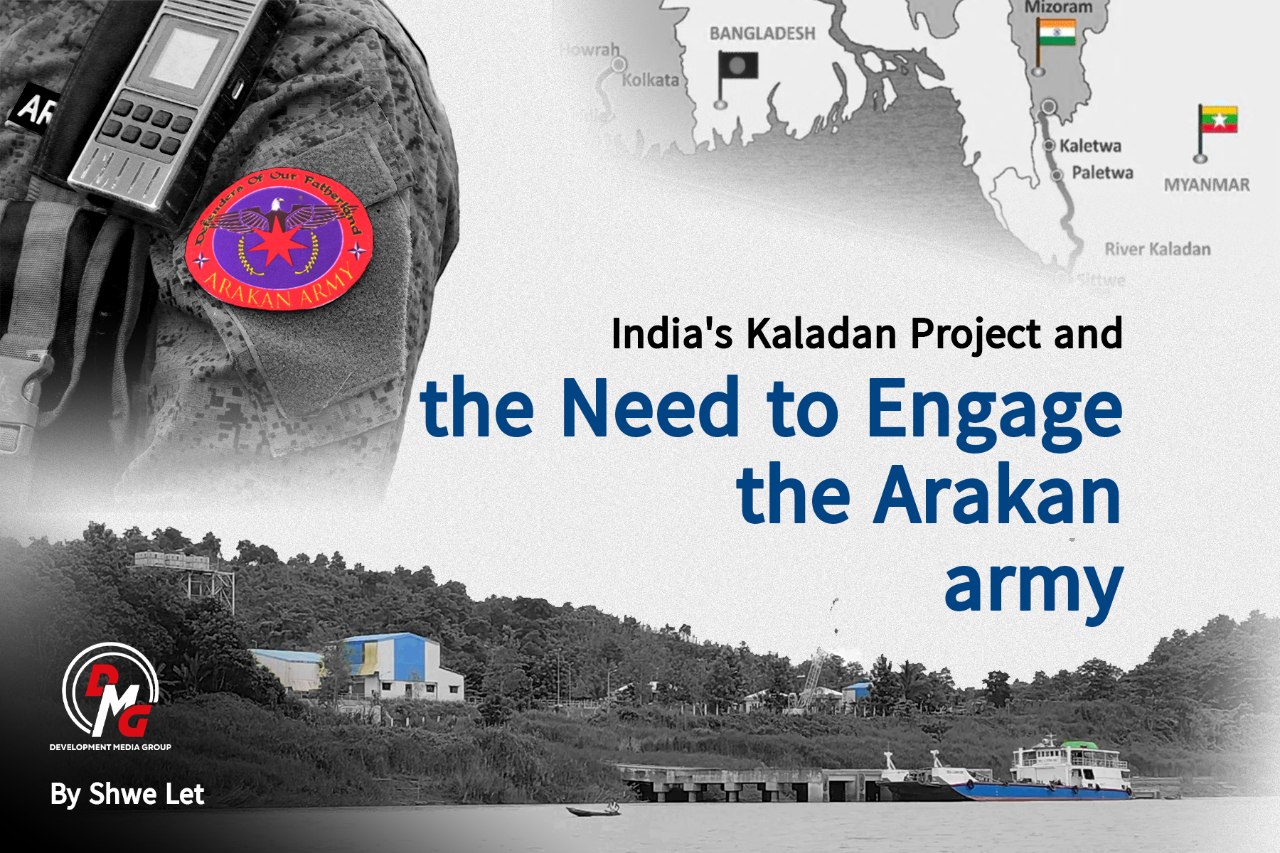
India's Kaladan Project and the Need to Engage the Arakan Army
By Admin 14 Nov 2026
Diwali: Illuminating the Path Towards a More Inclusive Society
By Admin 09 Nov 2026
The Journey of Arakanese Language Education
By Admin 03 Nov 2026
Can the UN Restore Trust in a Fractured World?
By Admin 23 Oct 2026
Arakan Amid the Storm: From Survival to Rebuilding a People
By Admin 22 Oct 2026
POLITICS

BUSINESS
Industry to manufacture finished goods from coconut starting in early 2020
By Aung Kaung Zaw 20 Nov 2019