

- Malaria cases surge across Ann Twsp as residents struggle to access healthcare
- Arakan’s elderly face deepening crisis amid war: CAS study
- ULA detains Arakanese merchants over Khaikhy dispute, moves to resolve issue
- Arakan Army captures four junta outposts on Sittwe-Ponnagyun front
- Magway records most airstrikes since new military chief took command: ISP-Myanmar
Paddy cultivation in Arakan State shrinks to around 500,000 acres
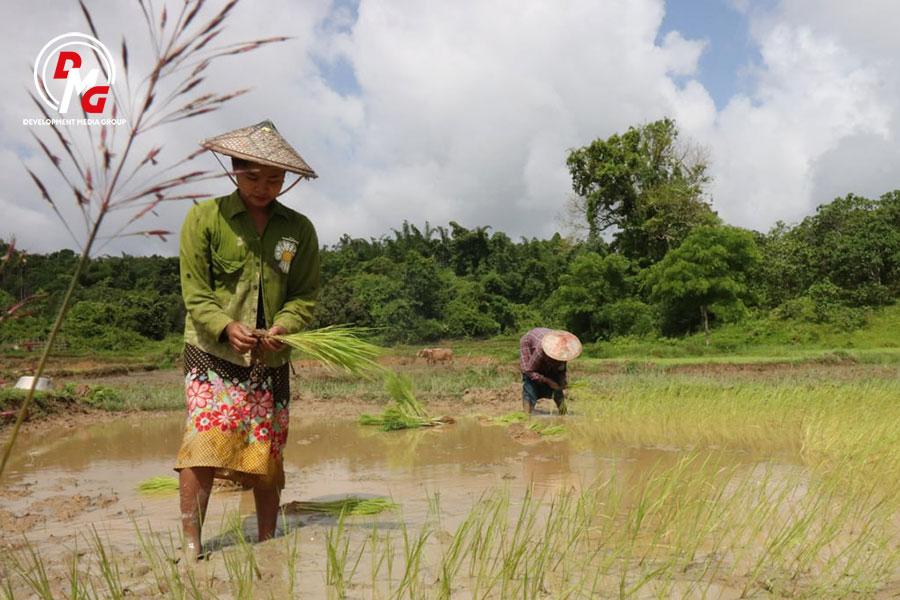
Ongoing military conflict in Arakan State over the past two years, spanning 2025 and 2026, has reduced the state’s cultivated paddy land to around 500,000 acres, according to agricultural observers.
19 Sep 2026
DMG Newsroom
19 September 2026, Kyauktaw
Ongoing military conflict in Arakan State over the past two years, spanning 2025 and 2026, has reduced the state’s cultivated paddy land to around 500,000 acres, according to agricultural observers.
Strict blockades imposed by the military regime during the fighting have driven up fuel and fertilizer prices, created labour shortages, and inflated overall farming costs, forcing local farmers to scale back their cultivated acreage compared to previous years.
Arakan State possesses approximately 1.1 million acres of total arable paddy land. Prior to the onset of township-capturing battles, local farmers cultivated up to one million acres in 2022.
However, following the resurgence of armed conflict in late 2023, the cultivated area shrank to around 800,000 acres.
According to agricultural tracking data, paddy cultivation across Arakan State has plummeted further over the past two years, reaching around 500,000 acres across 2025 and 2026.
"When clashes intensified, blockades triggered a sharp spike in fuel and fertilizer prices, forcing farmers to reduce cultivated acreage," said U Aung Kyaw Mya, former spokesperson for the Arakan Farmers' Union and an agricultural analyst in Arakan State. "The transition from traditional draft cattle farming to mechanized agriculture also played a role. Blockades prevented new tractors from entering Arakan State while making spare parts for existing machinery nearly impossible to find, compounding the crisis."
Skyrocketing commodity prices brought on by the fighting have left farmers unable to afford necessary agricultural inputs, prompting widespread reductions in cultivated land.
The transition from animal-drawn plowing to mechanized farming systems has created additional hurdles for local agricultural workers.
Farmers noted that junta-enforced blockades have restricted the import of power tillers and farm machinery into Arakan State while creating severe shortages of replacement parts for existing equipment, hitting the agricultural sector hard.
"Because of high input costs, most farmers in neighbouring villages have stopped farming altogether, although our village continues as usual," said U Tun Myint, a farmer from Kyarnetkan Village in Kyauktaw Township. "We keep farming simply because we have no other livelihood options."
This year, farmers struggling with high input costs faced further hardship from severe flooding.
Many farmers in Arakan State now fear reduced crop yields because they cannot afford fertilizer for replanted crops that were damaged by floodwaters.
"Flooding destroyed our initial paddy plantings this year, forcing us to replant," said Daw Aye Nu Yin, a farmer from Kyauktaw Township. "It is time to apply fertilizer again, but prices are far too high, so we cannot afford to buy any."
In several townships, active fighting and widespread displacement have forced residents to abandon their farmland entirely.
Farmers emphasize that these combined pressures have pushed Arakan State's agricultural sector into an unprecedented decline.
As agriculture serves as Arakan State's economic backbone, the sharp drop in paddy cultivation threatens regional food security, underscoring the urgent need for agricultural recovery measures.

Top News

Media outlets can verify Arakan State news through Justice For Arakan: ULA official
By Admin 20 Sep 2026
Paddy cultivation in Arakan State shrinks to around 500,000 acres
By Admin 19 Sep 2026

Junta navy detains eight Muslim fishermen in Werathani, abandons them at sea
By Admin 19 Sep 2026
Malaria cases surge across Ann Twsp as residents struggle to access healthcare
By Admin 19 Sep 2026
Arakan’s elderly face deepening crisis amid war: CAS study
By Admin 19 Sep 2026



.jpg)