
- Magway records most airstrikes since new military chief took command: ISP-Myanmar
- Junta warship destroys two fishing boats, seizes another off Werathani
- Junta jet fighters drop 500-pound bombs on former junta battalions in Mrauk-U
- Junta deploys fighter jets to bomb Ponnagyun
- Rathedaung villagers set up night watches amid Sittwe clashes, ARSA threat
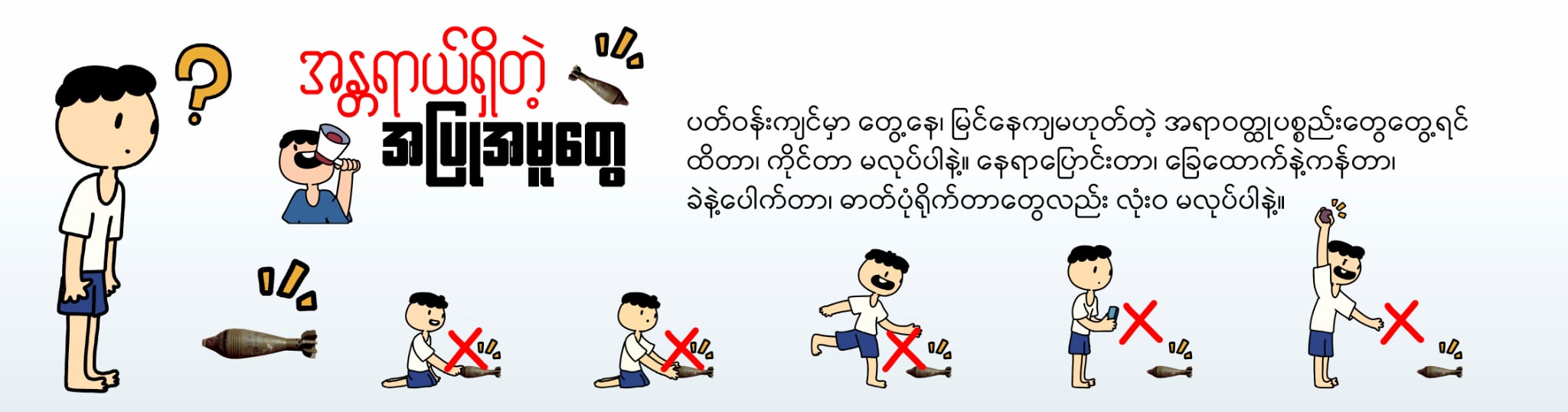
Rising temperatures heighten risk of spontaneous landmine and UXO explosions
As temperatures continue to rise during the summer season, landmines and unexploded ordnance (UXO) are at increased risk of detonating spontaneously, prompting mine-risk education advocates to urge heightened caution among Arakan State residents who depend on forests for their livelihoods.
23 Mar 2026
DMG Newsroom
23 March 2026, Kyauktaw
As temperatures continue to rise during the summer season, landmines and unexploded ordnance (UXO) are at increased risk of detonating spontaneously, prompting mine-risk education advocates to urge heightened caution among Arakan State residents who depend on forests for their livelihoods.
Advocates noted that due to intense fighting across Arakan State, landmines and UXOs remain scattered in many areas.
“During this scorching season, forest fires can significantly raise the temperature of mines and UXOs. As a result, the explosives inside become unstable and may detonate without any physical contact. The shrapnel can travel long distances and injure people nearby,” said a mine-risk educator in Arakan State.
He added that casualties caused by landmines and UXOs are being reported daily, making it essential for those who rely on forest activities to remain highly vigilant.
On March 20, a resident of Wetyu Village in Myebon Township was killed after stepping on a landmine while collecting firewood in nearby hills, resulting in the loss of his left leg.
On the same day, four women from Gyanma Village in Minbya Township encountered a landmine while searching for firewood near Mt. Kyein. One of them, Daw Aye Khaing, was seriously injured, losing both legs in the explosion.
Also that day, a youth identified as Maung Phoe La Pyae from Kanpaing Ward in Taungup was injured when a 40mm grenade he had picked up near the military’s Light Infantry Battalion No. 544 exploded while he was handling it.
Social workers stressed the urgent need to expand mine-risk education efforts, including the distribution of awareness materials and the installation of warning signs in public areas across Arakan State.
“Mine-risk education must be intensified, especially in former conflict zones and nearby areas. If the Arakan Army cannot yet carry out widespread awareness campaigns, it should allow NGOs and INGOs to operate freely. Many of these incidents occur due to a lack of awareness, so more effort is needed to prevent further loss of life,” said a social worker from Kyauktaw.
Despite awareness of the risks, locals who depend on forest-based livelihoods say they have little choice but to continue working in hazardous areas due to economic hardship.
“We live hand to mouth, so we cannot avoid going into the forest. We just try to be careful. Even though we fear landmines, we still have to survive,” said a resident of Rathedaung.
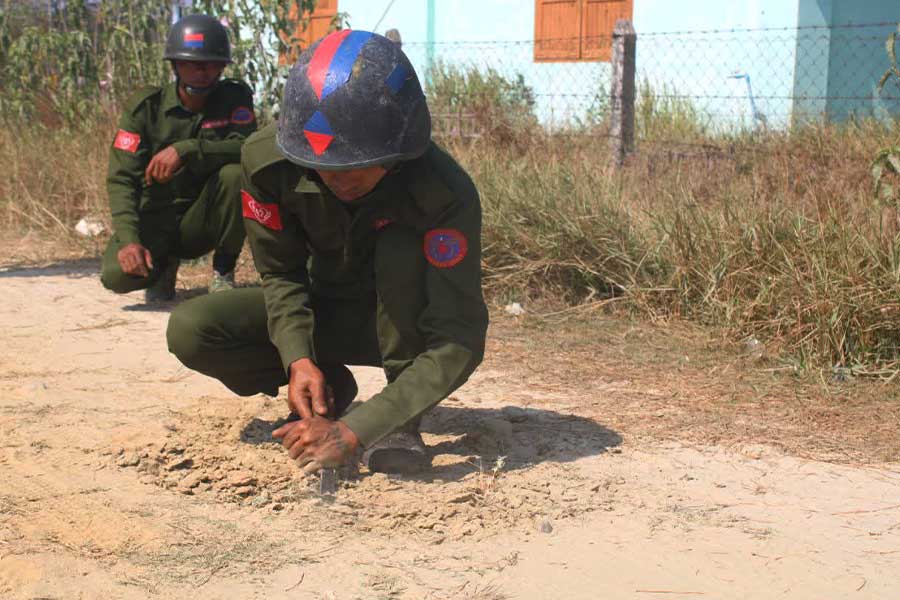
The Arakan Army has been conducting ongoing mine clearance operations in Rathedaung, Buthidaung, and Maungdaw townships, particularly in former military positions, abandoned camps, battle sites, and along roadsides.
According to data compiled by DMG, from April 2024 to March 20, 2026, a total of 110 people have been killed and 80 injured in Arakan State due to landmine and UXO explosions.

Top News
Magway records most airstrikes since new military chief took command: ISP-Myanmar
By Admin 17 Sep 2026
Junta warship destroys two fishing boats, seizes another off Werathani
By Admin 17 Sep 2026
Junta jet fighters drop 500-pound bombs on former junta battalions in Mrauk-U
By Admin 17 Sep 2026

JFM calls for Myanmar military to be barred from ARF drone workshop
By Admin 17 Sep 2026
Junta deploys fighter jets to bomb Ponnagyun
By Admin 17 Sep 2026



.jpg)