


- 86% of journalist killings remain unresolved worldwide: UNESCO
- Weekly Highlights from Arakan (October 26 to November 1, 2026)
- Junta airstrikes kill 209 civilians in Arakan over 10 months: DMG tally
- US links Myanmar peace strategy to rare-earth access and trade
- Monk wounded as junta airstrike hits Buddhist monastery in Kyauktaw
Weekly Highlights from Arakan (October 26 to November 1, 2026)
In an era when daily news from Arakan is often fragmented and fast-changing, DMG's Weekly Highlights of Arakan brings clarity, depth, and context to the stories that matter most.
03 Nov 2026
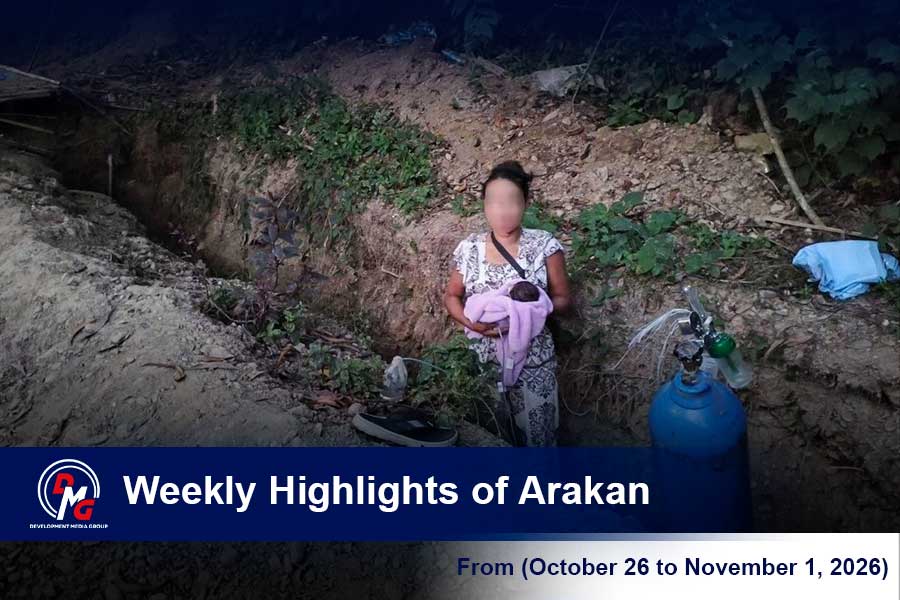
In an era when daily news from Arakan is often fragmented and fast-changing, DMG's Weekly Highlights of Arakan brings clarity, depth, and context to the stories that matter most.
Each week, we round up key political, military, social, and humanitarian developments across Arakan State - connecting the dots between events and offering analysis to help audiences see the bigger picture.
This series is designed for readers and viewers seeking a concise yet comprehensive understanding of how ongoing conflict, governance shifts, and community issues continue to shape lives across Arakan.
Myanmar airstrikes kill 12 civilians, injure 32 across four Arakan townships: AA
At least 12 civilians, including a newborn baby, were killed and 32 others injured in a series of Myanmar military airstrikes across four townships in Arakan (Rakhine) State on November 1, according to the Arakan Army (AA).
In a statement issued on Sunday, the AA said military aircraft struck Kyauktaw, Mrauk-U, Kyaukphyu and Werathani townships, hitting a bridge, a temporary medical facility, residential areas and villages.
At approximately 5:25 p.m., a military fighter jet bombed a bridge connecting Wa Taung and Pan Phae Chaung villages in Kyauktaw Township, killing seven civilians and injuring seven others, the AA said.
The attack also damaged the bridge, motorcycles, motorcycles with sidecars and nearby homes.
Two minutes later, at around 5:27 p.m., two fighter jets reportedly dropped four cluster bombs on a temporary medical clinic, a maternity ward and surrounding areas near Ngwe Taung Pauk in Thammarit Ward, Mrauk-U.
According to the AA, five civilians, including a newborn baby, were killed and nine others injured. Several medical workers were also wounded, while clinic buildings and nearby homes sustained damage.
In Kyaukphyu Township, two military fighter jets reportedly bombed Sanae Min Pyin village at approximately 5 p.m., injuring 11 civilians, including five women and six men. Residential buildings were also damaged.
Earlier that day, at approximately 3:58 a.m., a military Y-12 aircraft reportedly bombed Werathani (Pauktaw) and Ywar Chaung Gyi village, injuring five civilians: three women and two men, and damaging several homes.
The AA said the four attacks killed 12 civilians and injured 32 others, including children.
The armed group accused Myanmar's military authorities of attacking civilian infrastructure, including roads, bridges, healthcare facilities and residential neighbourhoods, describing the incidents as further war crimes.
The AA's allegation that cluster bombs were used in Mrauk-U raises particular concerns. Cluster munitions disperse smaller explosive devices over an area, potentially endangering civilians during and after an attack.
Under international humanitarian law, parties to armed conflicts must distinguish between civilians and combatants and between civilian objects and military objectives. Medical facilities are also afforded specific protections.
The reported attacks come amid continuing hostilities between Myanmar's military and the AA, which controls most of Arakan State following major territorial gains in recent years.
Junta airstrike hits high school in AA-held Maungdaw village
A military junta jet fighter dropped two bombs on a high school in Kyeinchaung Village in northern Maungdaw Township, an area controlled by the Arakan Army (AA), shortly after 2:00 a.m. on October 30, according to local residents.
Residents said the airstrike targeted the high school and the adjacent public market in Kyeinchaung Village.
Kyeinchaung is a populous village situated near the strategic junction connecting Taungpyo Letwe Town and Bandoola Village in northern Maungdaw Township.
The airstrike destroyed school facilities and damaged several nearby residential homes, causing anxiety among local villagers.
In a separate incident at around 9:00 p.m. on October 29, junta forces launched an air attack using two suicide drones targeting Kyaukseik Village in Ponnagyun Township.
A previous first-person-view (FPV) drone attack by junta forces on Kyaukseik Village on September 11 killed one civilian.
Additionally, on July 2, junta jet fighters and Y-12 aircraft conducted airstrikes on Kyeinchaung Village and the nearby former headquarters of Border Guard Police Battalion No. 7 (BGP-7).
The military junta continues to carry out airstrikes across Arakan State, targeting civilian areas in Rathedaung, Kyauktaw, Buthidaung, Maungdaw, Werathani, Ponnagyun and Sittwe townships.
70 Arakan civil society groups call for no-fly zone, emergency humanitarian aid
Seventy Arakanese civil society and charitable organisations have called on the international community to establish a no-fly zone over Myanmar's Arakan (Rakhine) State and provide emergency humanitarian assistance, warning that escalating military airstrikes and worsening food shortages are putting civilian lives at increasing risk.
In a joint statement issued on October 30, the organisations urged the United Nations Security Council (UNSC), the Association of Southeast Asian Nations (ASEAN), foreign governments and international humanitarian agencies to take immediate action to protect civilians and address the deteriorating humanitarian situation.
The appeal follows a September 28 military airstrike near Kyauktaw's India Market and Kissapanadi Bridge, which reportedly killed at least 50 people and injured 58 others. The UN human rights office condemned the attack, while the Independent Investigative Mechanism for Myanmar (IIMM) subsequently appealed for evidence of possible international crimes.
Citing figures from the Humanitarian and Development Coordination Office (HDCO) of the Arakan People's Authority, the statement reported that 298 civilians were killed and 678 injured in military attacks between October 2025 and October 2026. These included 55 children killed and 147 injured.
They outlined four principal demands: an internationally enforced no-fly zone over Arakan; immediate cross-border delivery of food, medicine and other essential humanitarian supplies; stronger sanctions on aviation fuel, weapons and military equipment supplied to the junta; and international support for investigations and accountability.
The groups specifically urged greater assistance for the IIMM, a UN-established investigative body tasked with collecting, analysing and preserving evidence of serious international crimes for use in relevant judicial proceedings.
The IIMM has separately sought information about the September 28 Kyauktaw attack and warned of increasing evidence of deliberate or indiscriminate attacks affecting civilians in Arakan.
The 70 organisations, comprising humanitarian and community groups based inside Myanmar and overseas, pledged to continue assisting conflict-affected populations despite mounting security risks and operational challenges.
They called for urgent international action to protect civilians, improve humanitarian access and ensure accountability for alleged violations of international humanitarian law.
ARSA steps up military activities in Maungdaw amid Sittwe fighting
Taking advantage of intense fighting between the military junta and the Arakan Army (AA) around Sittwe, the Arakan Rohingya Salvation Army (ARSA) has stepped up its military activities along the Bangladesh–Myanmar border in Maungdaw Township in recent days, according to local sources.
Border residents said ARSA fighters had carried out a series of military movements and hit-and-run attacks targeting Arakan Army border security outposts.
The Arakan Army previously said that junta forces had brought ARSA members to frontline areas around Sittwe Township and forced them to fight alongside regime troops.
During the 2024 battle for Maungdaw, armed groups including ARSA and the Rohingya Solidarity Organisation (RSO) fought against the Arakan Army while the military junta was also battling Arakan Army forces in the area.
The Arakan Army is currently conducting area-clearance operations to maintain border security. It has reportedly recovered bodies of ARSA fighters, weapons and ammunition following recent clashes.
Local residents expressed serious security concerns over continued ARSA movements near border villages, including Meetaik Village near Taungpyo Letwe Town in northern Maungdaw Township.
Military observers said ARSA's attacks on Arakan Army positions in Maungdaw coincided with intense fighting around Sittwe, and suggested that the activities could be part of a coordinated effort with the junta to harass and distract Arakan Army forces.
The Arakan Army has reinforced security along the Maungdaw border and is conducting counter-insurgency operations to clear ARSA fighters from the area.
Arakan Army strikes three junta warships near Sittwe, two reportedly sink
The Arakan Army (AA) attacked three junta warships near Sittwe on the evening of October 26, reportedly sinking two and damaging the third, according to military sources.
The naval vessels had been stationed near the mouth of the Kaladan River between Sittwe and Werathani townships, shelling Werathani and Ponnagyun townships to exert military pressure.
Military sources said the targeted vessels belonged to a junta naval group assigned to secure Sittwe and provide close fire support for the junta's offensive on Ngapyi Island. The three vessels reportedly included a frigate.
Fierce ground clashes between the military junta and the Arakan Army continued through the morning of October 28 near Ngapyi Island, Wahbo and Amyint Kyun villages.
Junta forces have been supporting ground troops with continuous artillery fire and drone strikes, military sources said.
Daily clashes have continued along the Sittwe–Ponnagyun border and around Ngapyi Island since the junta launched Operation 4926 on September 4, with junta forces deploying close air support, naval artillery and offensive drones.
In response, the Arakan Army has carried out counterattacks using heavy artillery and tactical drone strikes.
Clashes between the Arakan Army and junta forces are ongoing on Ngapyi Island and in areas near Amyint Kyun Bridge, Wahbo and Ngatauktet villages, according to local residents and military sources.
The military junta launched a major offensive involving thousands of troops in Ponnagyun Township on September 4.
After its advancing forces suffered heavy casualties and were forced to retreat, the junta shifted its offensive toward Ngapyi Island in Werathani Township on October 7 to carry out amphibious landings. In response, the Arakan Army launched counter-offensives against junta positions in Sittwe Township.
Both sides continue to suffer casualties along the Sittwe and Ngapyi Island fronts, deploying reinforcements and launching offensives to expand their territorial control.
High farming costs, falling yields hit Arakan farmers
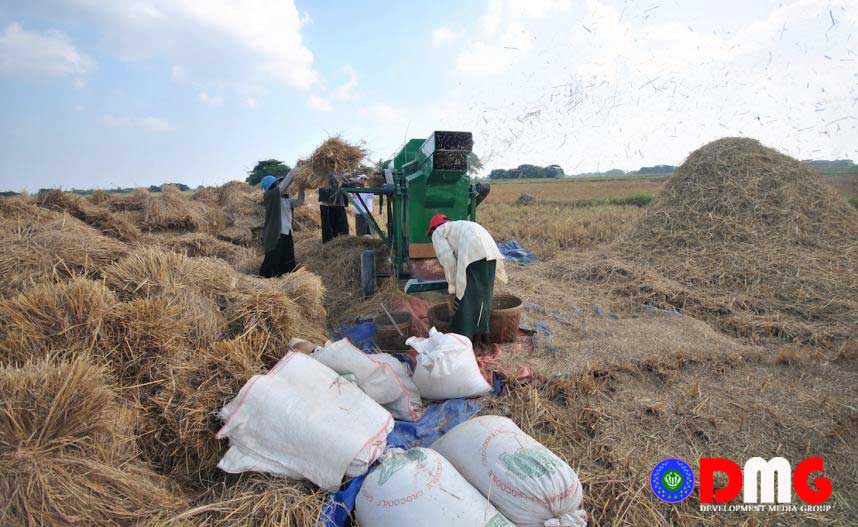
Low rainfall during the late monsoon, combined with soaring temperatures, has caused poor paddy heading across the Panmyaunggyi Creek area in Anjanapura Township, raising concerns among local farmers about a sharp decline in this year's harvest.
Flooding in the Panmyaunggyi Creek area during the early monsoon destroyed the initial crop plantings, forcing farmers to replant late in the season. The replanted crops are now struggling to develop heads and flower due to dry conditions.
The Panmyaunggyi Creek area encompasses around 20 villages, including Ohpyintaung, Ngatar, Pyinyaung, Shwetaung and Shwekyan. Local farmers said July flooding severely delayed planting, while subsequent dry conditions have stalled crop development.
Compounding the problem, the rainy season has ended without further rainfall, while temperatures have risen during the critical paddy heading stage.
To save their crops, some farmers are incurring high costs to pump water into their dry fields using motorized pumps.
Farmers across Arakan State are facing serious challenges caused by armed conflict, natural disasters and economic hardship.
Ongoing military clashes have disrupted supply chains, making agricultural inputs such as chemical fertilizers, pesticides and fuel extremely scarce and expensive.
High cultivation costs and soaring diesel and fertilizer prices have contributed to a steady decline in cultivated acreage across Arakan State, alongside falling crop yields.
Farmers said climate-related shocks, including severe droughts and seasonal flooding, continue to damage farmland and reduce overall agricultural output.
According to the World Meteorological Organization (WMO), the current El Niño event could reach unprecedented strength by the end of 2026.

Opinion

The Journey of Arakanese Language Education
By Admin 03 Nov 2026

Can the UN Restore Trust in a Fractured World?
By Admin 23 Oct 2026

Arakan Amid the Storm: From Survival to Rebuilding a People
By Admin 22 Oct 2026
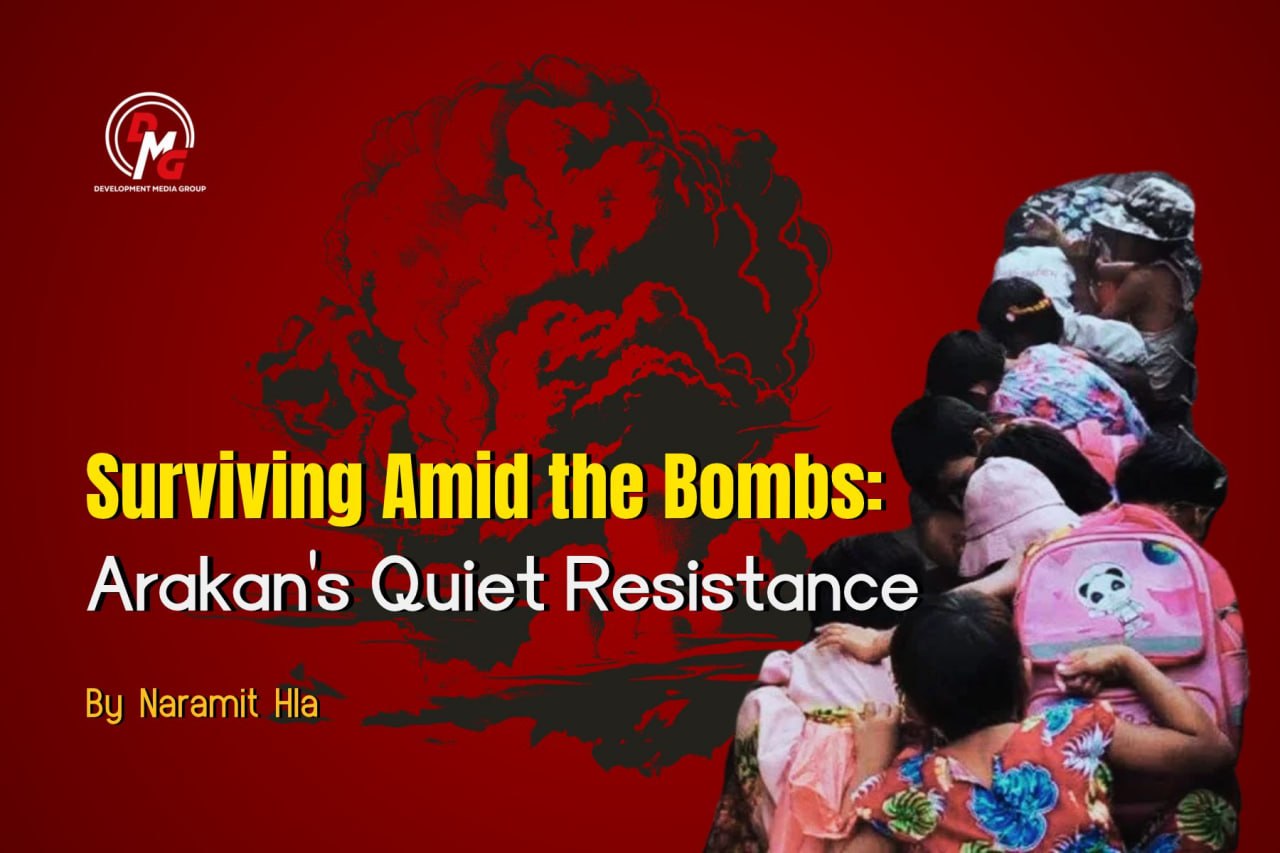
Surviving Amid the Bombs: Arakan's Quiet Resistance
By Admin 19 Oct 2026

Shadows Over Childhood: Confronting the Reality of Missing Children
By Admin 16 Oct 2026
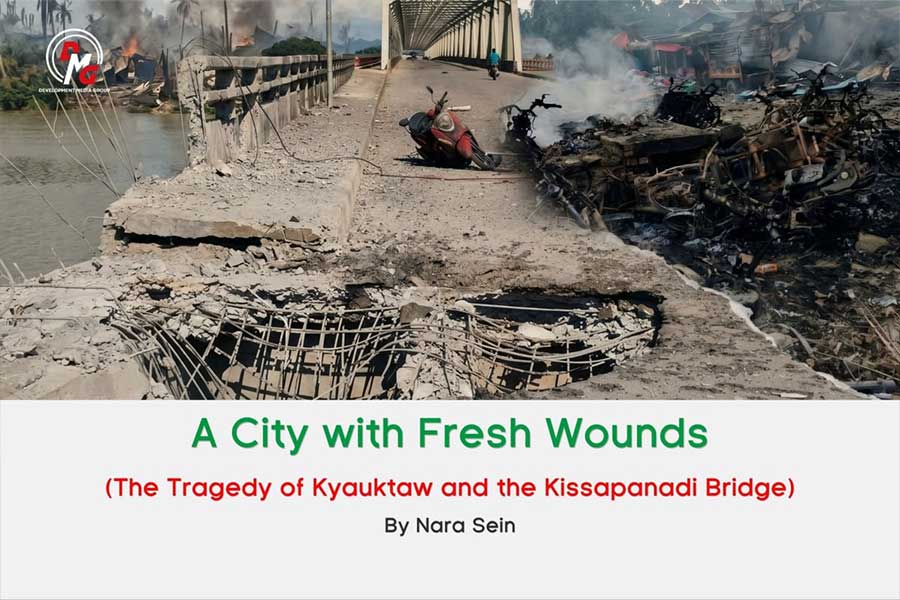
A City with Fresh Wounds (The Tragedy of Kyauktaw and the Kissapanadi Bridge)
By Admin 01 Oct 2026
POLITICS

BUSINESS
Industry to manufacture finished goods from coconut starting in early 2020
By Aung Kaung Zaw 20 Nov 2019