

- Casualties rise to 25 in junta airstrike on Thandwe Twsp village
- Junta targets civilian areas as Arakan Army counteroffensive inflicts heavy losses near Nat Yay Kan
- High taxes weaken Arakan-Bangladesh border trade
- ULA bans motorcycle driving for those under 16
- Weekly Highlights from Arakan (August 3 to 9, 2026)
High taxes weaken Arakan-Bangladesh border trade
While border trade continues between Arakan State and Bangladesh, high tax rates are posing significant challenges for ordinary merchants seeking to participate in cross-border trade.
11 Aug 2026
DMG Newsroom
11 August 2026, Maungdaw
While border trade continues between Arakan State and Bangladesh, high tax rates are posing significant challenges for ordinary merchants seeking to participate in cross-border trade.
In Arakan State, the military junta has cut off the flow of goods from mainland Myanmar, leaving the region reliant on imports from neighbouring India and Bangladesh.
However, steep taxes imposed by Bangladesh have hindered local merchants from participating in formal cross-border trade.
"When buying goods over there, taxes can amount to half the purchase price, essentially a 50 percent tax. Furthermore, ordinary merchants are not officially permitted to trade through formal channels," a local merchant in Maungdaw told DMG.
Arakanese merchants are barred from directly purchasing goods through official channels, while those who manage to make purchases face import taxes of up to 50 percent.
In addition to heavy taxation by Bangladesh, official trading privileges are largely restricted to merchant associations formed by the United League of Arakan (ULA).
"Our people cross over through whatever routes they can find. You don't necessarily have to go there yourself; traders from Bangladesh locate the goods and bring them to the border to sell. There are no official taxes to pay for that, just whatever price they set. Previously, the routes were more dangerous, but with more Arakan Army’s security checkpoints now in place, threats from the Arakan Rohingya Salvation Army have somewhat diminished," said a merchant from Buthidaung Township.
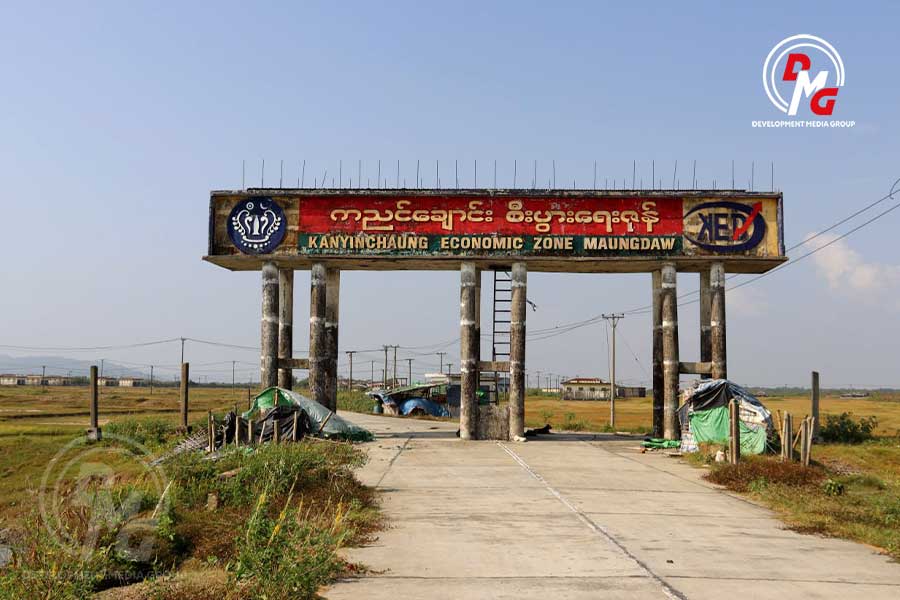
Bilateral trade between Teknaf in Bangladesh and Kanyin Chaung Jetty in Maungdaw, Arakan State, resumed in May, but private merchant participation remains low.
Imports through the Kanyin Chaung Economic Zone and the Teknaf trade route are currently limited to basic foodstuffs such as potatoes and onions.
Local merchants primarily order clothing, cosmetics and food items through border channels and hope for trade mechanisms that allow broader participation by local business owners.
A Maungdaw resident noted: "Is border trade happening? Yes and no. That's the reality. There is a small amount of trade, but rather than standard, formal trade, people are doing business through whatever means are available."
Residents added that, aside from the Kanyin Chaung Economic Zone, small volumes of goods also enter through other border points such as Taungpyo, Nanthataung and Bandoola along the Arakan-Bangladesh border.
The Bangladeshi government formally recognises trade under Myanmar-Bangladesh bilateral framework agreements, while conducting trade with the ULA on an informal, mutual-understanding basis.
According to Arakan State government data from the 2022–2023 fiscal year, before the outbreak of town-capture battles in Arakan State, annual border trade between Bangladesh and Arakan State stood at nearly US$260 million.
Local residents and merchants hope to see a broader, mutually beneficial trade framework established between Bangladesh and Arakan State.

Top News
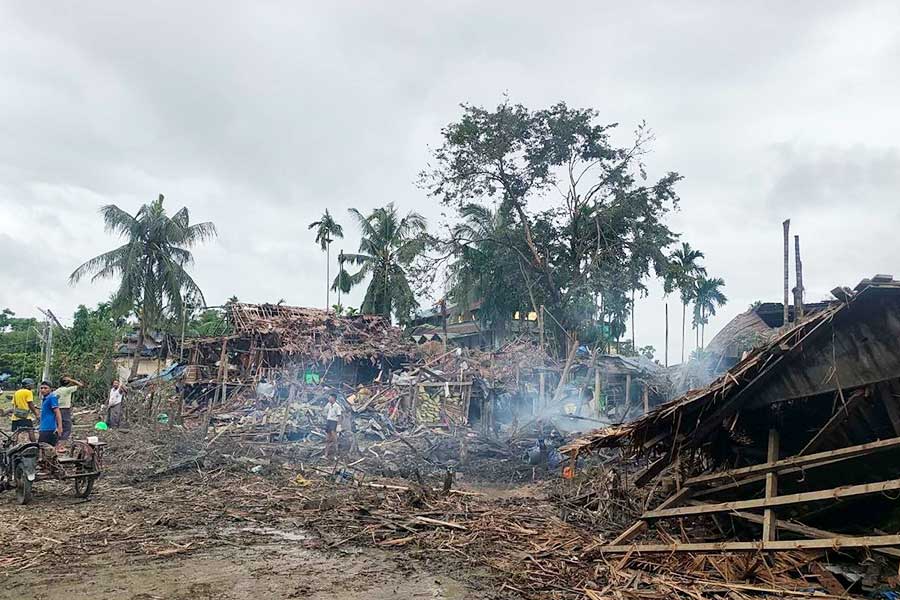
Casualties rise to 25 in junta airstrike on Thandwe Twsp village
By Admin 11 Aug 2026
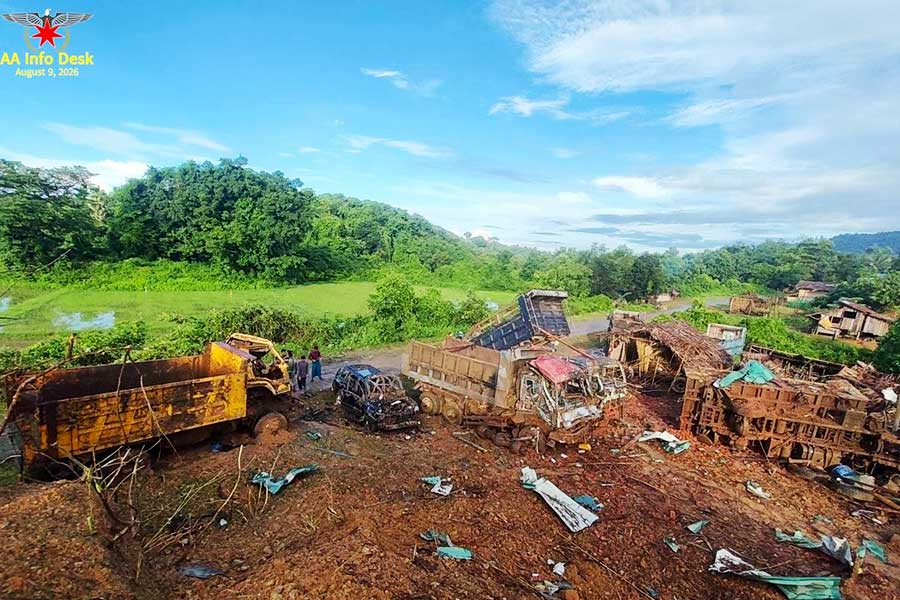
High taxes weaken Arakan-Bangladesh border trade
By Admin 11 Aug 2026
Regime reinforces Kyaukphyu front after heavy casualties
By Admin 10 Aug 2026
ULA bans motorcycle driving for those under 16
By Admin 10 Aug 2026