
- Magway records most airstrikes since new military chief took command: ISP-Myanmar
- Junta warship destroys two fishing boats, seizes another off Werathani
- Junta jet fighters drop 500-pound bombs on former junta battalions in Mrauk-U
- Junta deploys fighter jets to bomb Ponnagyun
- Rathedaung villagers set up night watches amid Sittwe clashes, ARSA threat
TNLA's Ta'ang State demand could reshape Myanmar's revolution
Military and political analysts say the TNLA entered the talks under significant Chinese pressure, but believe its demand for statehood could have a realistic chance of succeeding.
21 Jul 2026
DMG Newsroom
21 July 2026, Nay Pyi Taw
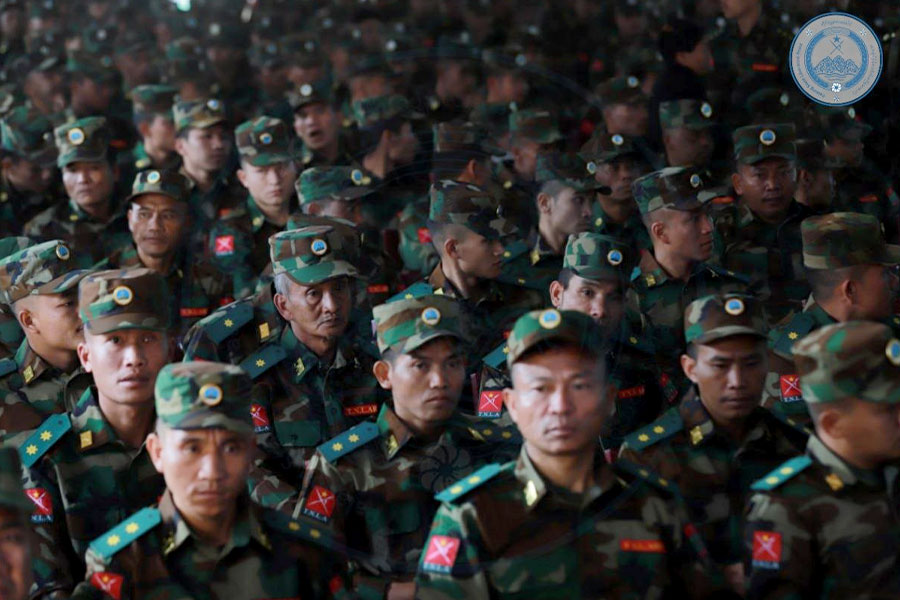
The regime’s National Solidarity and Peacemaking Negotiation Committee (NSPNC) and the Ta’ang National Liberation Army (TNLA) met in Nay Pyi Taw on July 19.
During the meeting, the TNLA requested official recognition of Ta’ang State for the territories under its control, while stating that it has no intention of seceding from Myanmar.
Military and political analysts say the TNLA entered the talks under significant Chinese pressure, but believe its demand for statehood could have a realistic chance of succeeding.
"This move is seen as accepting Chinese pressure to hold formal talks. Preliminary understandings were likely reached in Kunming. Ethnic armed organizations from northern Shan State, not just the TNLA, are expected to arrive in Nay Pyi Taw in stages," said Captain Zin Yaw, a military defector.
In response to the TNLA's request, the military regime said that because the Palaung Self-Administered Zone has already been established, granting statehood would require legislative approval.
The military and the TNLA are expected to hold another round of talks in Namhsan.
During Operation 1027, the TNLA seized control of several towns in northern Shan State and Mandalay Region, including Mantong, Namhsan, Namhkam, Kutkai, Mongngaw, Namtu, Kyaukme, Nawnghkio, Hsipaw, Momeik and Mogok. However, under pressure from China, the TNLA later handed Nawnghkio, Kyaukme, Hsipaw, Mogok and Momeik back to the military regime.
Military analysts said that if the negotiations produce positive outcomes for both sides, the TNLA could become less involved in the armed resistance, affecting other anti-regime forces.
U Aung Marm Oo, editor-in-chief of DMG and a political analyst, said, "Intense fighting continues between the Myanmar military and other forces, particularly the Arakan Army in Arakan State and the Kachin Independence Army in Kachin State. Any agreements reached by the TNLA could weaken military cooperation, logistical support and arms supplies to other resistance groups. China has reportedly exerted strong pressure on both the TNLA and the Myanmar National Democratic Alliance Army to participate in the regime's 100-day peace initiative. This has created a situation in which the TNLA can no longer openly support the revolution as before."
Launched on October 27, 2023, in northern Shan State, Operation 1027 significantly weakened the military regime. However, Chinese pressure led both the Myanmar National Democratic Alliance Army and the TNLA, members of the Three Brotherhood Alliance, to enter ceasefire negotiations with the regime.
Analysts said the development has affected revolutionary forces nationwide, leaving many resistance groups facing renewed military offensives and increased pressure.
"Fighting in northern Shan State is likely to decline gradually. Revolutionary forces may be forced to withdraw from strategic positions and face tighter restrictions on supply routes. Overall, this is a negative development for the revolution," Captain Zin Yaw said.
Observers said the revolution has become increasingly fragmented, with different groups facing varying external pressures, territorial disputes and military offensives.
Political analyst Dr. Sai Kyi Zin Soe said some ethnic armed organizations have entered negotiations with the military, while others remain committed to continuing the revolution.
"The Arakan Army faces complex regional socio-political challenges, while ethnic armed organizations along the Chinese border are under direct pressure from China. Under these circumstances, priorities naturally differ between immediate organizational interests and broader national objectives."
"As conditions change under external pressure, some organizations may choose negotiations, while others are working to strengthen political consensus and alliance frameworks that enable them to continue the struggle without entering talks," he added.
The regime led by self-appointed President Min Aung Hlaing designated the period from April 20 to July 31 as its 100-day peace initiative, holding a series of meetings with ceasefire groups and non-combatant ethnic armed organizations.
Despite its peace initiative, the military regime continues to launch offensives and intensify airstrikes in resistance-controlled areas.

Top News
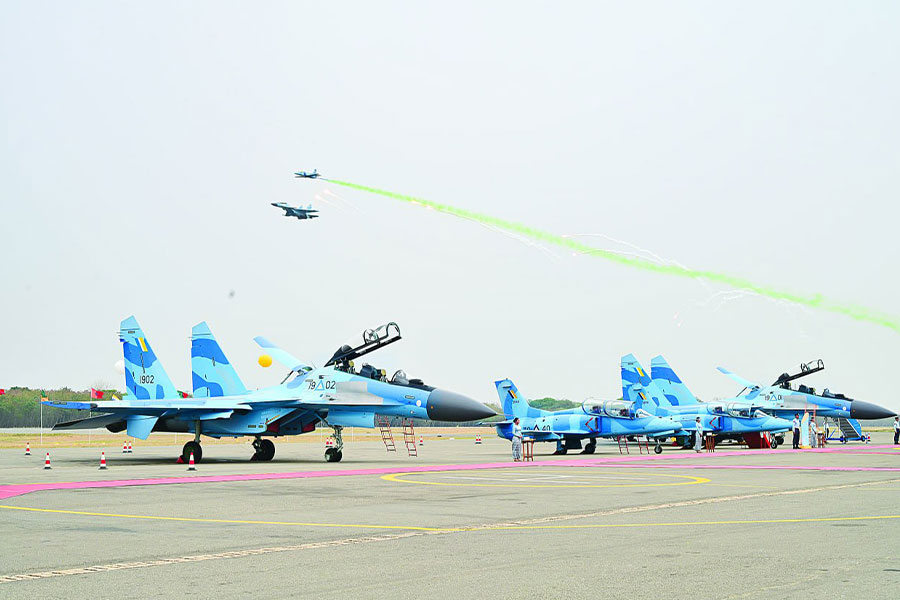
Magway records most airstrikes since new military chief took command: ISP-Myanmar
By Admin 17 Sep 2026
Junta warship destroys two fishing boats, seizes another off Werathani
By Admin 17 Sep 2026
Junta jet fighters drop 500-pound bombs on former junta battalions in Mrauk-U
By Admin 17 Sep 2026
JFM calls for Myanmar military to be barred from ARF drone workshop
By Admin 17 Sep 2026
Junta deploys fighter jets to bomb Ponnagyun
By Admin 17 Sep 2026

.jpg)