

- Kyauktaw market closure disrupts trade and drives up prices across Arakan
- Arakan has Myanmar’s highest multidimensional poverty, 1.66 million affected: UNDP
- Arakan records most armed incidents, second-highest civilian casualty toll in Myanmar: NLTA
- Junta fails to regain territory despite major Arakan offensive: ISP-Myanmar
- Two Myebon fishermen missing after junta troops throw fishermen into sea
Kyauktaw market closure disrupts trade and drives up prices across Arakan
Local trade, commerce, and the flow of goods have slowed drastically across Kyauktaw Township, Arakan State, following the military junta's deadly aerial bombardment of the town's Indian Market, according to local residents and traders.
10 Oct 2026
DMG Newsroom
10 October 2026, Kyauktaw
Local trade, commerce, and the flow of goods have slowed drastically across Kyauktaw Township, Arakan State, following the military junta's deadly aerial bombardment of the town's Indian Market, according to local residents and traders.
More than 10 days have passed since the Indian Market was shuttered in the wake of the airstrike. Merchants report that lingering fears of renewed aerial attacks have forced them to suspend business operations entirely.
"Traders are placing fewer orders nowadays," said a merchant in Kyauktaw Township. "Since trading at the Indian Market has completely stopped, buyer turnout has dropped significantly. We are currently holding off on stocking new goods at the market due to constant fears of airstrikes."
With the Indian Market closed, wholesale buyers from across Arakan State can no longer source goods locally, severely disrupting local supply chains.
The paralysis of local trading hubs has also disrupted commodity flows from India, plunging local trade and commercial enterprises into severe disarray.
"Previously, regular customers and outsiders came to buy goods, and sales were strong, generating at least K1 million a day," said a vendor at the Indian Market. "Now, we can only sell to our regular local customers, and daily revenues have plummeted to just over K100,000."
Alongside the contraction in commerce, basic food items and consumer goods are seeing spiraling price hikes across Kyauktaw Township.
The price of Indian eggs has surged from K500 to between K600 and K700 per egg, while a carton of red Indian cooking oil has jumped from K75,000 to K85,000.
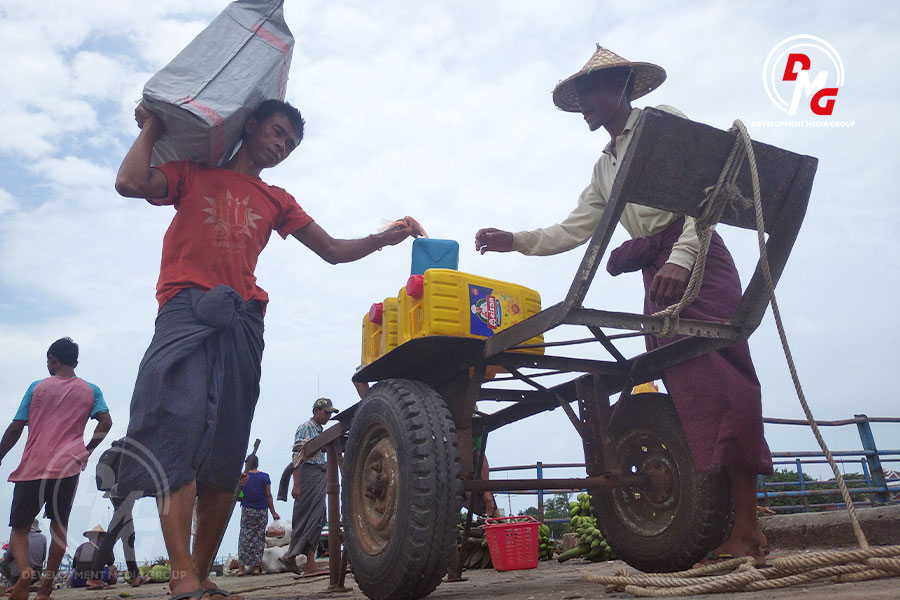
The Indian Market in Kyauktaw serves as the primary distribution hub for goods imported from India, supplying townships throughout Arakan State and supporting hundreds of daily wage laborers and vendors.
"I used to earn K50,000 a day," said an internally displaced person (IDP) working as a cargo handler at the Indian Market. "Ever since the airstrike, work has dried up, and I make only about K20,000 a day. We are struggling just to get by and cover our basic living expenses."
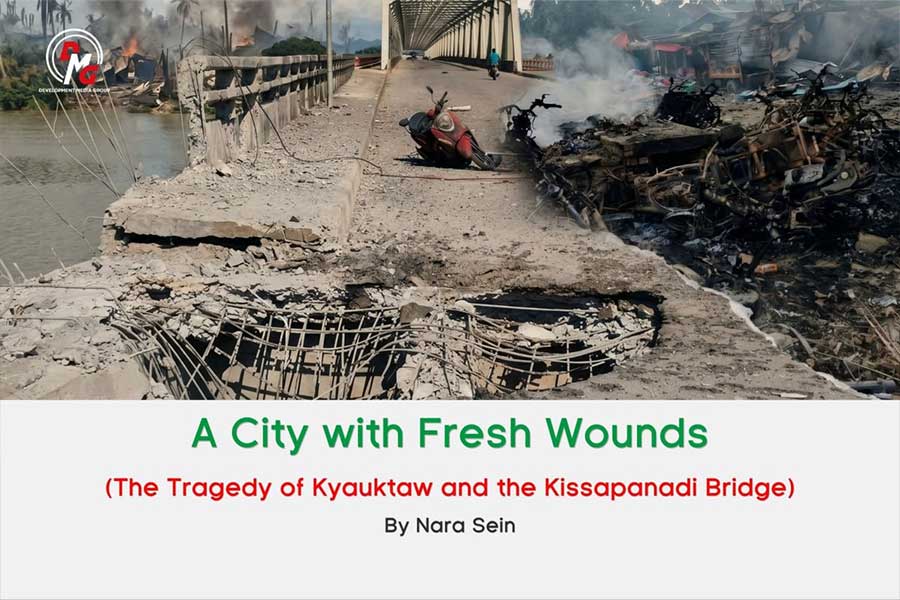
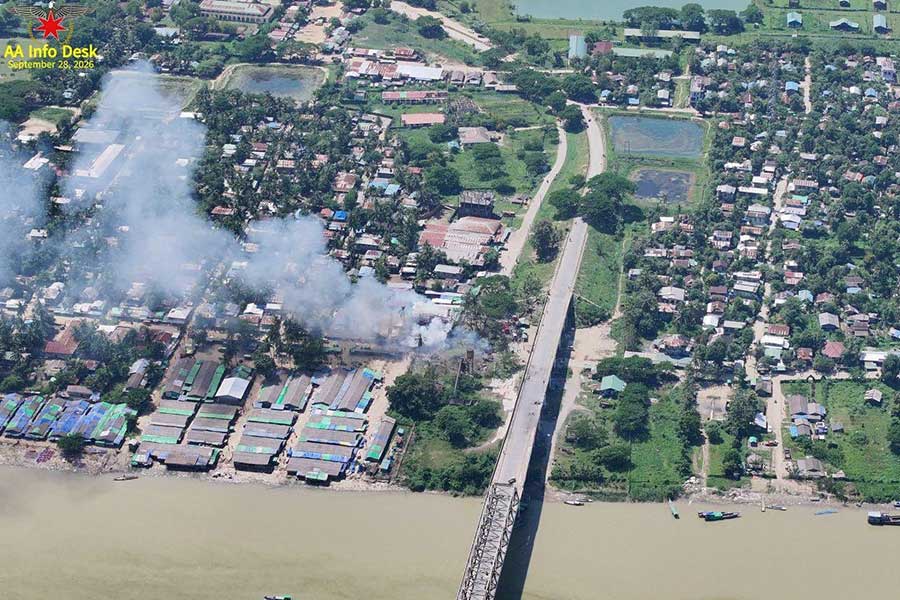
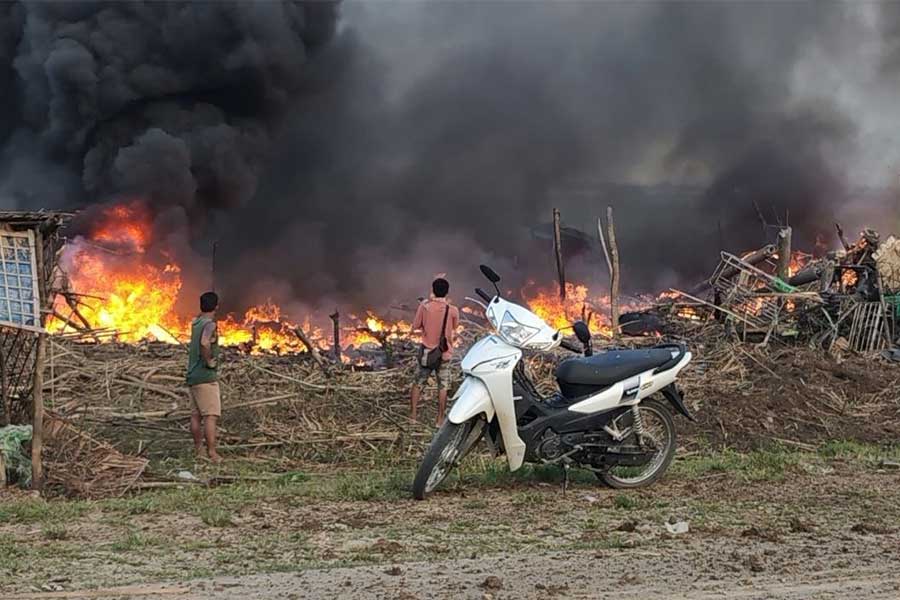
On September 28, the military junta launched airstrikes targeting Kyauktaw's Indian Market and the nearby Kissapanadi Bridge, killing 50 civilians and injuring 57 others.
The bombardment incinerated market stalls, cars, and motorcycles, triggering severe and lasting consequences for regional commerce, supply chains, and food security.

Top News
Kyauktaw market closure disrupts trade and drives up prices across Arakan
By Admin 10 Oct 2026
Arakan has Myanmar’s highest multidimensional poverty, 1.66 million affected: UNDP
By Admin 10 Oct 2026
Junta fails to regain territory despite major Arakan offensive: ISP-Myanmar
By Admin 10 Oct 2026
Clashes intensify near Taung Maw Oo naval station as Arakan Army launches offensive
By Admin 09 Oct 2026